

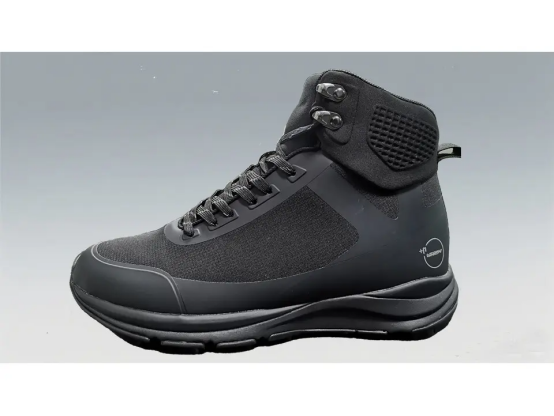
In the global footwear design and manufacturing industries, winter boot engineering represents one of the most physically constrained disciplines. Footwear designers must continually negotiate a delicate balance between external protective performance, aesthetic appeal, and internal physical space. Unlike heavy winter coats, which can drape loosely over the human body, a boot must conform tightly to the complex, highly sensitive anatomy of the foot. Historically, delivering exceptional cold-weather protection required packing heavy layers of wool, thick felt, or high-loft synthetic batting inside the boot’s upper and lining. However, this bulky approach introduces a severe spatial penalty. It crowds the toe box, compromises natural foot ergonomics, forces consumers to purchase larger sizes, and limits winter footwear to bulky, unmarketable silhouettes.
To resolve these age-old design limitations, premium footwear brands are undergoing a major technical transition. The modern consumer demands winter boots that look like sleek, elegant dress shoes or lightweight athletic trainers, yet possess the thermal capacity to withstand freezing conditions. Achieving this goal requires footwear product directors and supply chain managers to abandon loft-based design models and adopt advanced thin thermal insulation materials. By shifting from physical volume to high-performance scientific matrices, footwear developers can maximize internal foot comfort while delivering unprecedented design freedom to their creative teams.
Driving Footwear Evolution with Thin Thermal Insulation Materials
The human foot is an incredibly complex structure containing a dense network of blood vessels, nerves, and over two hundred and fifty thousand sweat glands. When designing cold-weather footwear, managing this delicate anatomical environment is paramount. Traditional thick insulation materials fail to address these unique biological conditions on two major fronts: spatial restriction and moisture accumulation. When thick, fluffy insulation is packed into a boot, it reduces the volume of the interior chamber. This physical crowding compresses the toes, which severely restricts micro-capillary blood circulation in the foot. Ironically, this lack of healthy blood flow causes the wearer’s feet to feel cold, completely defeating the purpose of the insulation.
Furthermore, the soles of our feet are among the most active sweat-producing zones on the body. Traditional lofted linings often trap this perspiration inside the shoe, creating a damp, humid environment. As moisture builds up, the wet fibers quickly lose their ability to trap air, leading to rapid, conductive heat loss that leaves the foot cold and uncomfortable. To prevent this cycle of dampness and chill, footwear brands require thin thermal insulation materials that can block cold from the frozen ground while actively facilitating moisture transport. By utilizing ultra-thin, structurally stable thermal sheets, shoe manufacturers can preserve the vital space inside the toe box, ensuring healthy blood circulation and a dry, warm interior microclimate.
The Kinematics of Footwear Flexion and Compression Resistance
Unlike winter coats that experience gentle, sweeping movements, footwear is subjected to intense mechanical stress. During a typical daily walk, a boot undergoes thousands of deep flexes across the vamp crease, while the heel and sole experience continuous, high-pressure compression under the wearer’s full body weight. Under these brutal mechanical conditions, traditional lofted insulation degrades rapidly. Fluffy synthetic fills and natural wool compress permanently under the heel, flattening out and losing their thermal resistance within a few weeks of consistent wear.
Additionally, the repetitive bending at the forefoot crease causes loose fibers to migrate, clump, and separate, leaving the toe joint completely unprotected from the creeping cold. This physical breakdown represents a major hurdle for B2B brands looking to guarantee multi-season durability. Resolving this mechanical wear-and-tear requires an advanced class of thin thermal insulation materials designed to resist permanent physical compression. A structurally stable, flexible insulation sheet ensures that even under the constant pressure of a stepping heel, the thermal barrier remains uniform, intact, and highly effective throughout the entire lifecycle of the shoe.
Y-Warm: Space-Age Nanoporous Physics for Modern Footwear
At the absolute forefront of this technological evolution is Y-Warm, a revolutionary material developed by Beijing Y-Warm Technologies Co., Ltd. While traditional industry giants focus on imitating down or refining fiber diameters to trap convective air, Y-Warm changes the actual physical rules of heat transfer. It utilizes a proprietary, highly flexible nanoporous membrane structure that acts as a true thermal barrier. This breakthrough development successfully overcomes the mechanical brittleness historically associated with aerogels, allowing space-age thermal properties to be fully integrated into commercial footwear.
For footwear designers, the physical properties of Y-Warm completely redefine what is possible in winter boot aesthetics. Measuring just 0.7 millimeters in thickness, Y-Warm can be easily integrated into a boot’s lining without altering the original shoe last or crowding the toe box. Despite this incredibly thin profile, its ultra-low thermal conductivity acts as an impervious cold-blocking shield.
Furthermore, Y-Warm solves the critical issue of foot perspiration. While the nanoporous membrane is completely windproof and air-impermeable, it is highly water-vapor permeable. It features built-in hydrophilic groups that actively absorb moisture vapor evaporated from the foot, pulling it away from the skin and transporting it to the outer surface for rapid evaporation. This ensures that the interior of the boot remains dry, warm, and comfortable, protecting the wearer from cold-wet conduction even during high-intensity walking or hiking.
Streamlining Footwear Production and Last Design
From a B2B manufacturing and supply chain perspective, adopting Y-Warm offers immense operational advantages. In traditional footwear factories, integrating thick, loose batting requires complex sewing, heavy stitching, and constant adjustments to the shoe lasts to accommodate the extra lining volume. Because Y-Warm behaves like a durable, flexible textile sheet, shoe factories can cut, stitch, and laminate it using their existing machinery.
Furthermore, because the material is exceptionally thin, designers no longer need to create separate, larger lasts for winter collections. A single, elegant shoe last can be used to produce both spring shoes and high-performance winter boots, significantly reducing tooling costs and streamlining factory operations. To maintain the integrity of Y-Warm’s unique nanoporous structure, factory partners simply need to ensure that lamination temperatures remain strictly below 100°C during the assembly process.
About Y-Warm and Our Commitment to Footwear Innovation
Beijing Y-Warm Technologies Co., Ltd. is a global pioneer in advanced material science, specializing in revolutionary thermal solutions that replace heavy, bulky linings with thin, high-performance physical barriers. By changing the physics of heat transfer, Y-Warm offers an exclusive, globally patented technology that delivers outstanding windproofing, water-vapor permeability, and structural durability. Highly sustainable and safety-certified, our material is EU SVHC (REACH) compliant and Oeko-Tex Standard 100 certified, making it the perfect choice for forward-thinking brands striving to lead the market in functional luxury. Discover how this revolutionary material can transform your product development by exploring our dedicated footwear applications and requesting your professional sample kit today at Y-Warm Shoes.