

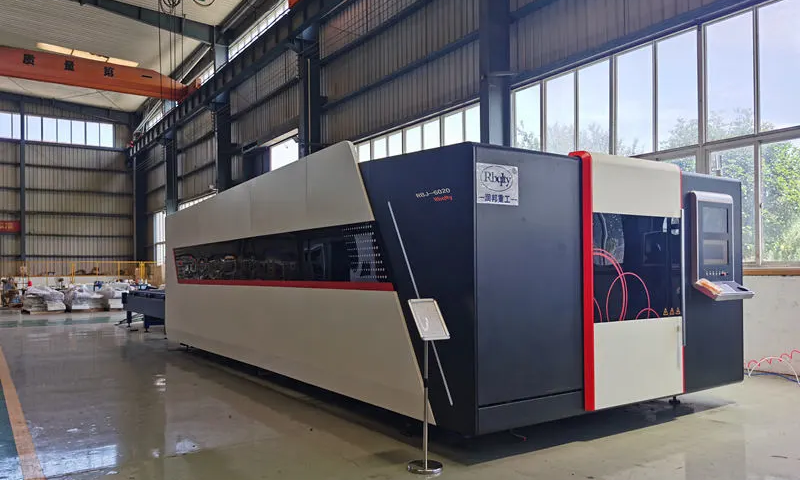
Evaluating a laser equipment supplier is a due-diligence task. The objective is to confirm that the quotation describes a machine suited to the intended work. The supplier must also document, test, deliver, and support that exact configuration.
A proposal with little technical detail makes comparison difficult even when the headline laser power looks attractive. A useful review begins by turning production requirements into an enquiry package.
This keeps sheet metal fabrication equipment procurement focused on evidence instead of broad claims about speed, precision, or quality.
What Information Belongs in the Supplier Enquiry?
Start with the work itself. Include material types, normal and maximum thicknesses, sheet or tube dimensions, representative drawings, expected job variety, loading method, available floor space, and the processes that follow cutting.
This information separates real requirements from optional preferences. A factory processing flat sheet only does not automatically benefit from a combined sheet-and-tube platform. A line with frequent profile changes places more value on flexible programming than one running a narrow group of repeated parts.
RBQLTY’s laser catalogue includes single-table machines, enclosed exchange-table systems, sheet-and-pipe configurations, dedicated pipe cutters, long-format models, and laser equipment with feeding functions. The range shows why a laser cutting machine supplier requires enough application data to recommend a machine format, not just a power level.
How Can a Quotation Be Checked for Configuration Transparency?
A quotation should identify the machine model, working area, laser source or source option, cutting head, control system, motion components, cooling arrangement, safety configuration, major accessories, and material-handling equipment. Standard items and optional items should be separated clearly.
Selected RBQLTY product pages publish model-level component information. This helps illustrate an important procurement principle: two machines with similar headline specifications often differ in the systems surrounding the laser.
Create a line-by-line comparison rather than relying on a short sales summary. Check what is included, what is optional, which substitutions are permitted, and which configuration the price actually covers.
When reviewing laser cutting machine supplier proposals, this approach prevents a basic machine from appearing equivalent to a more complete package simply because both carry the same power figure.
Configuration transparency also matters after delivery. It gives operations, maintenance, and purchasing teams the same reference when the machine enters regular production. Service teams work more efficiently when the installed controller, drives, cutting head, cooling equipment, and accessories are recorded accurately.
The same records help purchasing teams source replacement items and help operators confirm that manuals and software references match the machine on the floor. Version control also deserves attention during quotation revisions.
When options change during negotiation, each revision should show which configuration, accessory list, and commercial offer belong together.
What Should a Sample-Cutting and Acceptance Plan Prove?
A demonstration becomes useful when it reproduces real production challenges. Send representative files and explain why each sample matters. One part might represent a common material and thickness. Another contains a hole pattern, tight contour, or feature that creates difficulty in normal production.
Judge the result against requirements agreed in advance. The goal is not to produce one attractive showpiece. The test confirms that the proposed machine completes relevant work under known conditions.
Acceptance covers several practical items:
- Confirm the exact machine model and major components.
- Check the agreed control functions and accessories.
- Run the representative sample work.
- Verify basic machine movements and material handling.
- Review the documentation supplied with the equipment.
Customized items belong in the same acceptance scope. Recording the supplied configuration, sample files, and relevant settings also creates a clearer reference for later commissioning.
What Support Information Should Be Clarified Before Shipment?
Support is easier to manage when responsibilities are defined before the machine leaves the factory. This is especially important when the laser forms part of a larger sheet metal fabrication equipment line. Installation preparation, manuals, electrical information, controller support, consumables, replacement parts, and technical contacts all deserve clear answers.
A simple checklist is more useful than a general promise of “after-sales service.” It defines factory preparation, supplied documentation, technical-contact routes, and parts identification in separate items.
RBQLTY develops laser machines alongside press brakes, shears, rolling machines, punching equipment, plasma cutters, and other sheet metal fabrication equipment. That wider range is relevant when the laser sits within a larger production line, but each machine still requires its own service records and configuration details.
The strongest supplier review therefore reduces uncertainty at every stage: enquiry, quotation, testing, acceptance, delivery, and support. It does not depend on a long list of promotional claims.
Conclusion
A laser cutting machine supplier is easier to assess when the purchase leaves a clear technical record. RBQLTY publishes several laser formats and product-level details available for review during this process.
Production data defines the requirement, the quotation identifies the configuration, sample cutting tests the application, and acceptance confirms delivery. The fewer assumptions left between these stages, the easier the equipment is to compare and support.