

As we move into 2026, the way dental labs are built and run has changed a lot. The “digital-first” laboratory is now the standard, even though lost-wax casting and manual layering were once the most common ways to make things. 3D printing is at the centre of this revolution. It used to be a costly novelty, but now it’s an essential tool for production. For a modern dental service, the ability to make high-precision parts layer by layer means that they can achieve a level of anatomical accuracy and material efficiency that subtractive milling or manual moulding can’t match.
Additive manufacturing is scientifically better because it can handle complicated internal shapes and give micron-level accuracy. The dental 3D printing market is expected to be worth about $5 billion in 2026. This is because vat polymerisation and selective laser sintering are becoming more popular very quickly. These technologies let labs make anything from complex surgical guides to permanent restorations that are safe for the body, all without wasting any materials. This level of efficiency is very important for labs that have to handle the high volume of work that urban clinics need while still meeting the strict quality standards that are necessary for patient safety.
MDfA’s Strategic Lab Modernisation
To move from a traditional setup to a fully digital workflow, you need strategic help and access to a reliable global supply chain. MDfA (Messe Düsseldorf for Asia) plays an important role here. MDfA connects the needs of international engineering with those of regional laboratories as a guide for the Asian medical technology market. The organisation makes sure that lab owners can get the newest “closed-loop” systems through its global MEDICAlliance network. These systems let scanners, software, and 3D printers talk to each other using open-architecture protocols.
In 2026, MDfA’s job goes beyond buying things; it also works to make digital workflows more consistent. The group helps labs avoid “technology silos,” where equipment from different companies can’t work together, by setting up platforms that show how well different technologies can work together. Labs that want to increase their production without losing the accuracy that makes modern dentistry so great need this kind of strategic oversight. For an international brand, the best way to show Asian customers who are ready to buy that their dental equipment is worth the money is to work with these platforms.
FAMDENT Hyderabad 2026: The Place for Additive Manufacturing
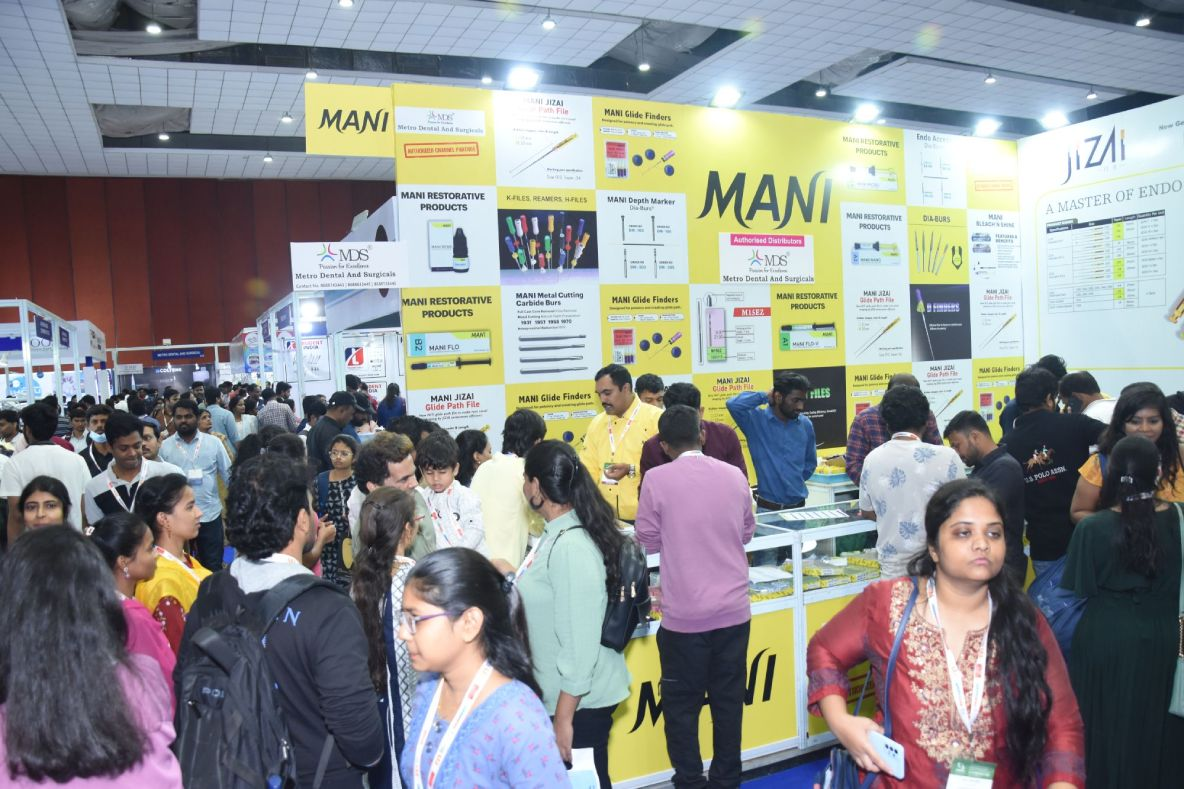
The HITEX Exhibition Centre will host the FAMDENT Exhibition Hyderabad on February 7–8, 2026. This is the best place for dental professionals to learn about the latest in additive manufacturing. MDfA put on the event, which has more than 120 exhibitors. A large number of them are now focused on digital lab solutions. The 2026 edition focusses on the “Automated Lab” idea, which combines AI-driven design software with 3D printing to make a smooth production thread.
People who go to the HITEX Exhibition Centre can see live demonstrations of high-speed DLP (Digital Light Processing) and MSLA (Masked Stereolithography) printers. These machines can now print 4 to 5 dental crowns in less than 15 minutes, which is a speed that was unthinkable just a few years ago. Laboratory technicians can check the surface finish and dimensional accuracy of different resins by watching these tools in real time. This makes sure they pick the right technology for everything from clear aligners to high-strength permanent prosthetics.
Improving the productivity and service of labs
Adding 3D printers to the lab’s workflow does more than just speed up production; it changes the way the clinic provides dental care. Intraoral scanners send digital files that can be processed right away. This means that labs can start printing models or guides just a few minutes after a patient’s scan. This “on-demand” manufacturing ability gets rid of the need for physical impressions and stone models, which cuts the time it takes to finish complicated cases from weeks to days.
3D printing also lets you do “batch production,” which means that you can print dozens of different appliances for different patients on the same build plate at the same time. This ability to grow is what will make the modern lab profitable in 2026. At the FAMDENT show, lab owners can learn about the newest biocompatible materials, such as new multi-color resins that can be used to make beautiful, one-piece dentures and bridges. These improvements make sure that the final product is not only strong but also meets the higher aesthetic standards of today’s patients.
To sum up
3D printing is the most important technology in the dental lab of 2026. It is fast, accurate, and cheap. Labs can greatly boost their productivity and offer their clinical partners a higher level of service by using these additive manufacturing workflows. The FAMDENT Exhibition Hyderabad 2026 is the best place to see these new ideas in action and get the tools you need to be successful in the future.