

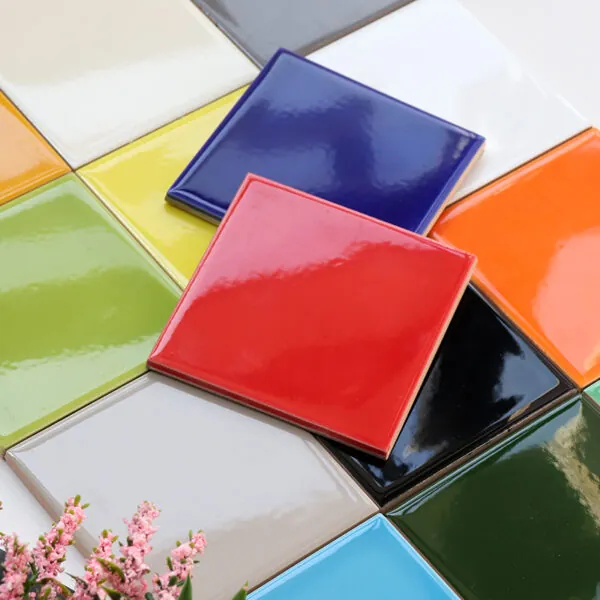
For over a century, the subway tile has been synonymous with clinical white rectangles. This visual inheritance stems from early urban transit stations. While this neutral palette endures for its versatility, designers and property owners are reclaiming the format for chromatic expression. Intentional color choices introduce distinct personality into otherwise restrained interiors.
Vibrant installations are increasingly specified to define functional zones within open-plan spaces and align commercial areas with brand identities. The shift from default white requires an understanding of how color saturation and glaze interact with natural light. Adjacent materials and room scale also influence the result, demanding careful specification.
The Evolution of Subway Tile Beyond Classic White
The original rectangular format emerged in the early 1900s as a reflective, hygienic surface for underground platforms. Its migration into residential spaces preserved that utilitarian DNA, typically featuring white glaze and brick-stack installation. Recently, manufacturers expanded glaze chemistry to produce consistent colors across the spectrum, ranging from muted earth tones to deep jewel hues.
This chromatic expansion allows the format to serve contemporary design languages that standard white cannot accommodate. JLA Ceramics produces subway tiles in an extensive color range extending well beyond traditional neutrals. The collection includes compact square modules and elongated profiles, giving designers dimensional flexibility to deploy color across varied spatial contexts.
Kitchen Backsplashes: Using Color to Anchor the Space
The kitchen backsplash occupies a visible band between countertops and wall cabinets, making it an ideal zone for chromatic experimentation. Cool blues introduce a refreshing counterpoint to warm wood cabinetry and brass hardware. Deep terracotta creates focal warmth in kitchens with neutral stone countertops. Tonal consistency across the tile run matters greatly for these ribbons.
JLA Ceramics supports kitchen backsplash specifications across the color spectrum. This broad selection allows buyers to coordinate tile hues with existing cabinet finishes, countertop veining, and metalwork selections rather than treating the backsplash as a default white field. Sourcing through a reliable manufacturer ensures the chosen shade integrates cohesively into the material palette.
Bathroom Walls and Showers: Saturated Hues in Compact Spaces
Bathrooms present a different color challenge than kitchens due to smaller footprints and limited natural light. Designers often mitigate this by using color on a single feature wall while keeping remaining surfaces neutral. Alternatively, desaturated colors like sage or slate gray introduce chromatic interest without overwhelming a confined volume. Glossy glazes amplify available light effectively.
The JLA Ceramics catalog includes both glossy and matte finishes across its color palette. This variety enables specification decisions that account for bathroom size, light availability, and desired atmospheric warmth. By balancing finish and hue, procurement teams can successfully integrate vibrant surfaces into compact washroom layouts without creating a claustrophobic effect.
Commercial Interiors: Brand Identity and Spatial Storytelling
In commercial settings like retail boutiques or hotel lobbies, tile color functions as an extension of brand identity. A coffee roastery might specify deep espresso tones, while a coastal hospitality brand could deploy aquamarine. Commercial color specification must align with brand guidelines, photographic consistency for social media presence, and the psychological impact on customers.
JLA Ceramics supports commercial projects with scalable production of colored tiles and custom design services. The company’s OEM capabilities enable color customization aligned with project-specific requirements for hospitality, retail, and food-service applications. This approach addresses the practical durability that commercial environments require while supporting the chromatic specificity that brand designers seek.
Color Theory for Subway Tile Selection
Effective color specification relies on understanding relational dynamics rather than selecting isolated favorites. Analogous schemes create harmonious surfaces suitable for spas, while complementary pairings generate visual energy appropriate for social dining spaces. Monochromatic installations using a single color in varying saturations add depth. The grout color further modulates the final effect, with contrasting grout emphasizing individual tile geometry.
Buyers sourcing through the manufacturer can evaluate different shades alongside complementary finish options. The technical team offers guidance on grout coordination that supports the intended color relationship within the space. Proper planning ensures that the final colorful subway tile installation achieves the desired atmospheric impact without visual conflict.
Glaze Technology and Color Consistency Across Batches
The apparent simplicity of a colored tile conceals complex glaze chemistry. Pigment stability during high-temperature firing varies by color family, with some hues requiring more controlled firing conditions than others to achieve batch-to-batch consistency. Lightfastness—the resistance of a glaze to fading under UV exposure—varies by formulation and should be considered for installations near windows or in exterior-adjacent spaces.
Buyers specifying large volumes should request batch samples and confirm that the manufacturer maintains master color standards. The company enforces strict color consistency checks across every production batch. This quality control process is particularly important for colorful subway tile orders, where visual uniformity directly determines the success of the final installation.
Sourcing Colorful Subway Tile for Diverse Projects
Selecting a supplier for chromatic surfaces requires evaluating more than a digital color chart. Screen calibration and ambient lighting cannot accurately assess glaze depth. Buyers should request physical samples under their project’s actual lighting conditions and verify that the supplier can reproduce the approved color across the full order volume, accounting for appropriate sampling cycles.
JLA Ceramics is a professional tile manufacturer in Foshan, China, offering a comprehensive collection spanning diverse colors, sizes, and finishes. The company provides custom design and OEM services alongside its standard collection. To browse the full color range or discuss custom requirements for your project, visit JLA Ceramics.