

Choosing the right 5G module for an outdoor unit (ODU) is a critical decision for vendors and system integrators building high-performance fixed wireless access (FWA) and edge networking products. The correct 5G module for ODU determines throughput ceilings, latency characteristics, thermal behavior, RF flexibility, and how easily the device integrates with antennas and backhaul. This buying guide highlights the practical considerations when selecting a 5G module and how to match module capabilities—such as mmWave and Sub-6 GHz support—to your ODU design goals.
Understand Your Use Case and Performance Targets
The first step in choosing a 5G module is defining the ODU’s primary use case. Are you targeting ultra-high-throughput short-range links with mmWave, broad-coverage Sub-6 GHz deployments, or a hybrid approach? A 5G module that supports both 5G mmWave and 5G Sub-6 GHz delivers maximum flexibility for varied deployment environments. For ODUs intended for CPE, gateways, or industrial telemedicine terminals, prioritize modules that offer multiple high-speed interfaces (for example, USXGMII or multi-gigabit Ethernet) and a capable on-module CPU to handle local processing and packet routing.
RF Design, Antenna Integration, and Thermal Considerations
ODU performance depends heavily on RF chain design and antenna integration. Look for a 5G module for ODU that exposes multiple antenna ports and supports configurations tailored to your beamforming and MIMO requirements. Modules with combined antenna support—such as dedicated mmWave arrays plus several Sub-6 ports and GNSS—simplify mechanical integration and reduce time to market. Thermal management is equally important: modules with higher power draw (especially those supporting mmWave) require careful heat sinking and enclosure design to sustain long-term reliability and consistent throughput.
Interfaces, Processing Power, and Software Ecosystem
A strong chipset choice includes abundant high-speed interfaces and on-board processing to reduce external components. Modules featuring dual 10Gbps interfaces and an integrated multi-core CPU enable ODUs to act as full-featured CPE or routing platforms without an external host processor. Evaluate the module’s software stack, driver maturity, and support for standard protocols and security features. A mature SDK and proven firmware accelerate integration and ensure easier certification and maintenance in the field.
Lifecycle, Carrier Certification, and Support
Selecting a 5G module for ODU also requires attention to the supplier’s certification roadmap and global carrier approvals. Choose a module vendor that offers ongoing firmware updates, lifecycle support, and assistance with cluster testing and regulatory compliance. Robust supply chain continuity and accessible technical support reduce deployment risk for large-scale ODU rollouts.
Why FG190W and Fibocom Matter to Your ODU Design
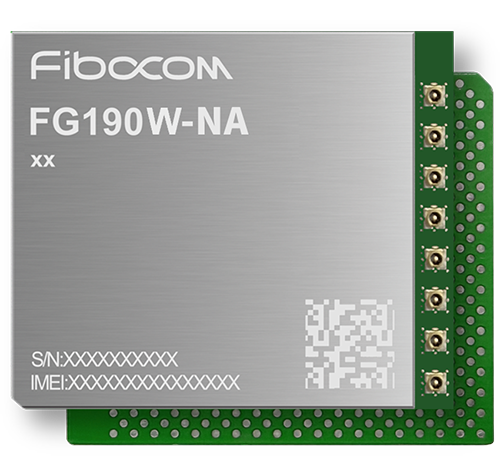
For ODUs that require both mmWave and Sub-6 flexibility, the FG190W exemplifies a modern 5G module for ODU: it combines 5G mmWave and 5G Sub-6 GHz air interfaces, multiple antenna ports (8 mmWave + 4/6/8 Sub-6 + GNSS), dual 10Gbps USXGMII interfaces, and a built-in ARM Cortex-A55 CPU to support gateway and CPE-level functionality. As Fibocom works with partners worldwide, the company provides these 5G modules and the integration expertise to help shorten development cycles, meet performance targets, and deliver reliable ODUs for diverse applications. Fibocom is committed to supplying high-performance 5G module solutions that accelerate customer product success.