

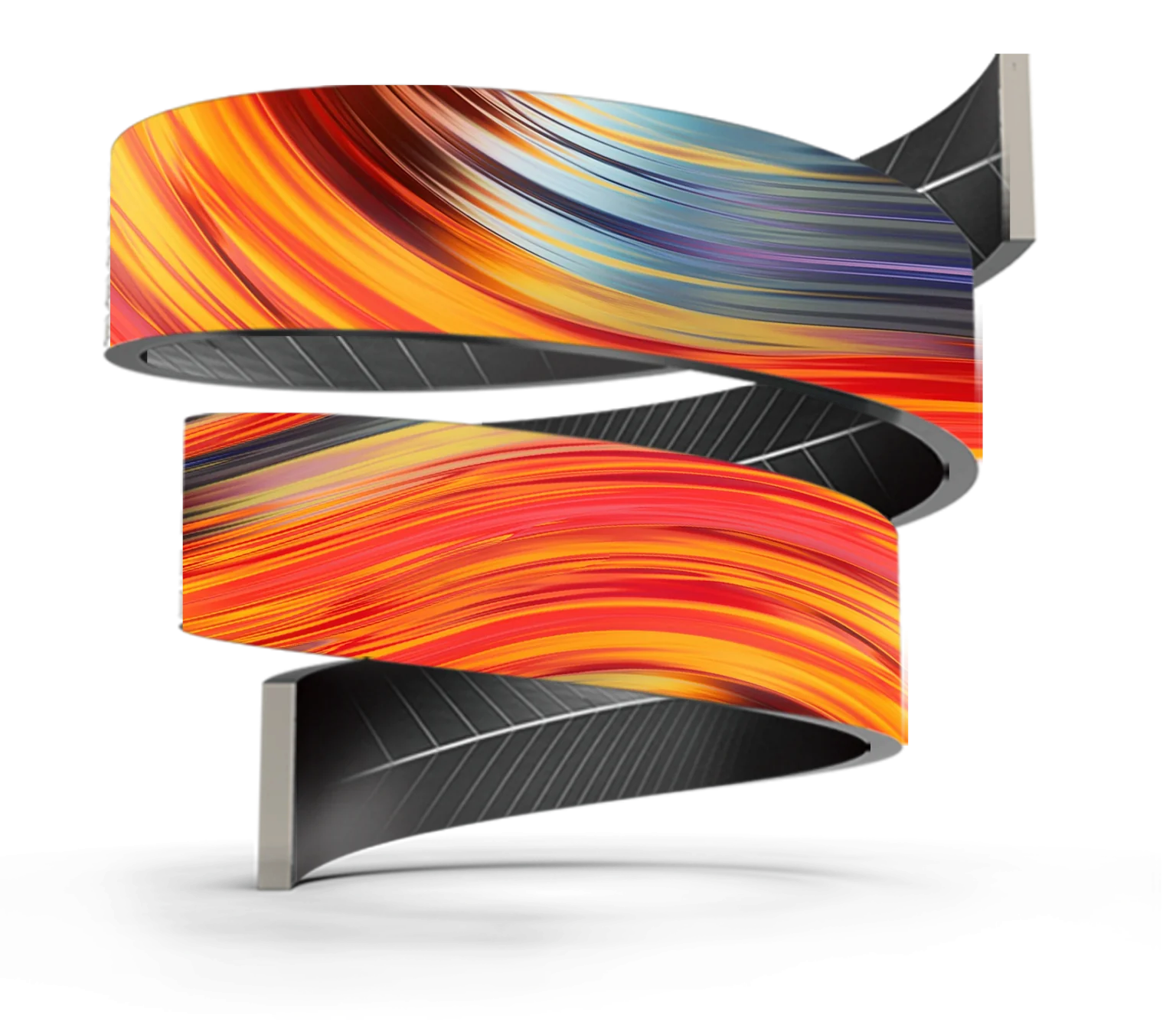
Commercial display projects are moving beyond flat rectangular screens toward immersive environments, architectural integration, and distinctive visual experiences. Retail stores, exhibition venues, corporate showrooms, and entertainment spaces increasingly require display systems that adapt to their surroundings rather than simply occupy a wall. Flexible LED technology supports this shift by allowing designers to explore curved surfaces and unconventional screen configurations while maintaining the visual impact expected from modern digital signage.
For project planners, the challenge is balancing creative ambition with installation requirements, structural constraints, image quality, and long-term operating costs. Understanding the latest flexible display trends helps integrators, designers, and procurement teams evaluate suitable solutions. HDC, a high-tech enterprise integrating research and development, manufacturing, sales, and service for creative and commercial LED displays, offers its HR Series flexible screen modules for projects that require adaptable display geometry.
Curved and Irregular Displays Are Becoming More Practical
One important trend is the shift from conventional flat panels to displays that follow the physical shape of a commercial space. Cylindrical columns, curved reception desks, concave walls, and wave-shaped installations can turn otherwise ordinary surfaces into digital communication points.
A flexible LED screen makes these configurations possible through bendable modules that can be assembled to suit compatible curved structures. For retail brands, this opens opportunities to connect product storytelling with interior design. Exhibition organizers can also use unconventional screen shapes to attract attention without relying solely on larger display areas.
The practical value depends on the project. A curved display may improve visibility from different positions, while a cylindrical screen can present content around a column. However, the display geometry, viewing distance, and content layout must work together to prevent visual distortion.
Flexible Modules Expand Creative Installation Options
Modern commercial display projects increasingly treat screen geometry as part of the original design rather than an adjustment made after construction. Modular flexibility supports this approach, allowing integrators to explore shapes that rigid, flat cabinets cannot easily reproduce.
HDC’s HR Series flexible LED display module is designed for curved screens, cylindrical displays, and other curved surfaces. Its bending angle is at least 140°. The deep U-shaped silicone bottom shell is designed to make the module more flexible and support large-angle display configurations.
The HR Series also supports inner-arc applications, where the display curves inward to create a more enclosed visual surface. These characteristics can help project teams develop distinctive installations for showrooms, retail environments, and branded commercial interiors.
Nevertheless, a stated bending angle should not be treated as proof that every radius or three-dimensional shape is achievable. Before specifying a module, buyers should confirm the permitted bending direction, minimum bend radius, mounting method, and compatibility with the planned support structure.
Installation Engineering Is Becoming a Key Purchasing Consideration
Creative freedom alone does not determine whether a display project succeeds. Structural accuracy, access for maintenance, cable routing, and the alignment of individual modules all influence the final result.
For a curved installation, the supporting frame must match the intended geometry. Poor alignment can create uneven surfaces or visible gaps, while an unsuitable bend can place mechanical stress on the modules. Project teams should therefore share drawings, dimensions, curve measurements, and site conditions with the supplier before confirming the design.
Procurement teams should also evaluate installation time and future servicing requirements. A design that looks impressive but requires extensive dismantling for routine maintenance may increase the total cost of ownership. Early coordination between architects, display manufacturers, contractors, and content teams can reduce avoidable changes during installation.
For HDC HR Series projects, buyers can begin by defining the desired inner or outer curve, the display’s overall dimensions, and the viewing positions. These details help determine whether the proposed module arrangement is suitable and what additional structural engineering may be required.
Content Design Must Evolve With Screen Geometry
As commercial displays become more sculptural, content production must account for the physical surface. A video designed for a flat rectangle may appear stretched, misaligned, or difficult to follow when wrapped around a cylinder or curved wall.
A flexible LED screen project should therefore include content mapping during the planning stage. Designers need to consider where images, text, logos, and product visuals will appear across bends and viewing angles. Testing content against the proposed screen layout before installation can help identify distortions and improve visual continuity.
For business buyers, this requirement affects both budgeting and project coordination. Display hardware, control systems, creative production, and installation should be evaluated as connected parts of one solution rather than isolated purchases.
Total Project Value Matters More Than Shape Alone
The commercial value of creative LED displays depends on how effectively they support business objectives. A curved screen may strengthen brand presentation, but its investment case should also consider audience engagement, campaign flexibility, operating requirements, and maintenance costs.
When comparing suppliers, buyers should request detailed specifications for pixel pitch, brightness, refresh rate, power consumption, operating environment, and service access. These parameters are not confirmed in the supplied HR Series information and should be verified against the exact model’s technical documentation before procurement.
HDC’s combination of research and development, manufacturing, sales, and service provides a relevant starting point for businesses exploring creative commercial display projects. Its HR Series offers a module-based approach to curved and inner-arc installations, although final suitability depends on the project’s technical requirements and site conditions.
Building Better Commercial Displays Through Flexible Technology
The development of flexible LED technology is expanding the possibilities for commercial spaces, from curved retail displays to cylindrical brand installations and custom architectural features. Its value lies in combining distinctive visual design with practical engineering, reliable operation, and content that suits the display’s shape.
For businesses evaluating HDC‘s HR Series, the next step is to define the installation geometry, viewing distance, image requirements, and maintenance expectations before confirming a configuration. With accurate specifications and early coordination among project stakeholders, creative LED displays can become purposeful commercial assets rather than simply eye-catching design features.