

Inundated with endless digital options, modern mobile subscribers demand highly tailored experiences that match their daily usage patterns. Traditional communication systems often struggle to meet these demands because they analyze subscriber records in disconnected, static database pools. Utilizing an AI customer engagement platform allows operators to study behavioral data dynamically and deliver meaningful responses instantly.
These advanced computing systems evaluate real-time data to anticipate customer issues and propose customized service plans before subscribers feel any frustration. By moving away from rigid, pre-scheduled communication models, service providers can cultivate genuine loyalty and reduce subscriber churn. This strategic shift towards automated personalization is redefining how modern communication networks interact with their target audiences.
Dismantling Data Silos for Unified Views
Fragmented communication databases make it incredibly difficult for service providers to obtain a clear, comprehensive understanding of their subscribers. Information gathered from retail branches, online chat applications, and network usage meters often resides in separate, unlinked software environments. This disconnected structure prevents customer service representatives from obtaining the necessary history required to resolve complex inquiries.
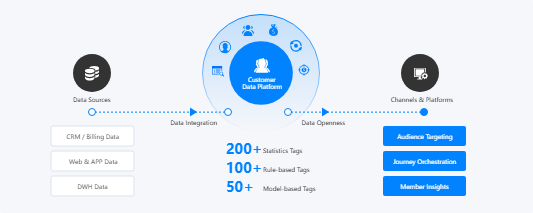
To resolve this critical fragmentation problem, Whale Cloud advocates for the integration of centralized data ecosystems within enterprise operations. Unifying multi-source customer data to build a comprehensive 720° customer view helps companies eliminate operational blind spots. With all data flowing into a single source of truth, teams can easily trace every subscriber interaction.
Achieving Precise Targeting with Customer Data Platforms
A modern Customer Data Platform (CDP) serves as the engine that powers highly targeted and successful marketing initiatives. By gathering diverse data points from every active digital channel, a CDP constructs dynamic customer profiles that update in real time. These profiles enable precise audience targeting, helping operators send promotional offers that match specific user interests.
Instead of sending mass, generic text messages, marketing teams can use these smart profiles to launch highly specific campaigns. The unified platform created by Whale Cloud facilitates behavioral and demographic data points are synthesized securely and instantly. This level of data organization helps that marketing investments yield maximum engagement and minimal customer irritation.
Leveraging Artificial Intelligence for Real-Time Insights
Processing massive volumes of unstructured communication data requires advanced processing systems that can operate at scale. Traditional analytical tools are often too slow, producing reports days after a specific customer event has occurred. Artificial intelligence solves this latency issue by continuously scanning incoming data streams to find hidden behavioral trends.
An AI customer engagement platform utilizes these machine learning algorithms to identify subtle patterns of subscriber dissatisfaction automatically. This capability allows the system to trigger immediate, proactive outreach, such as a localized service offer or an automated troubleshooting guide. Resolving issues in real time helps operators build trust and protect their core subscriber bases.
Enhancing Customer Experiences via Interactive Portals
Modern subscribers expect their communication providers to offer intuitive, self-service applications that allow them to manage accounts easily. When online portals are slow or confusing, users frequently flood call centers with basic, repetitive questions. Providing responsive digital touchpoints allows customers to resolve problems independently and customize their service packages on demand.
Integrating an interactive customer engagement platform telecom operators use supports these self-service applications remain fast and reliable. These portals can suggest personalized plan upgrades or add-on services based on the subscriber’s historical data patterns. This seamless self-management capability increases digital sales while significantly lowering overall operational support expenses.
Optimizing Subscriber Journeys across Channels
A subscriber’s interaction journey is rarely confined to a single digital application or website. Customers frequently begin a service purchase on their smartphones and attempt to complete the transaction on a home computer or in a physical store. If the system fails to save their progress across these devices, customers will often abandon the process entirely.
Deploying a versatile customer engagement platform telecom providers can trust allows subscriber progress is saved and updated continuously across all touchpoints. This operational fluidity prevents users from having to repeat steps, making the overall experience feel completely unified. Consistent journey orchestration is key to driving high conversion rates across all service portfolios.
Automating Proactive Support Strategies
Waiting for a subscriber to complain about a network outage or billing error often results in permanent brand damage. Modern customer care models rely on proactive notification systems to inform users about ongoing issues and expected resolution timelines. Informing users beforehand reduces call center volume and demonstrates a high level of corporate transparency.
Incorporating a highly responsive AI customer engagement platform enables systems to detect network anomalies and notify affected users automatically. The platform can instantly dispatch personalized updates and offer alternative connection resources during localized maintenance windows. This empathetic, automated communication style transforms potentially negative network events into positive customer experiences.
Driving Continuous Software Evolution in Telecoms
The rapid introduction of new network technologies requires software platforms that can adapt without needing expensive, custom overhauls. Closed software architectures limit an operator’s ability to integrate modern AI tools or third-party digital services. Maintaining agility requires a strong commitment to modular software structures and open, standardized communication interfaces.
By deploying flexible software components, organizations can continuously upgrade their customer-facing tools to match changing global standards. The innovative framework engineered by Whale Cloud provides operators with the scalable infrastructure needed to support these continuous updates. This modular design philosophy future-proofs digital systems against unpredictable market shifts.
Conclusion
Transitioning to unified, intelligent database structures is essential for telecommunications providers aiming to survive in highly competitive digital markets. Utilizing specialized customer data platforms allows companies to break down information silos and obtain valuable, comprehensive customer profiles. These deep insights enable highly precise audience targeting and personalized communication strategies.
Integrating a modern customer engagement platform telecom operators can easily deploy allows subscriber interactions remain fast, consistent, and relevant. Moving away from legacy systems toward artificial intelligence and modular software helps companies adapt to evolving subscriber behaviors effortlessly. Investing in standardized data integration remains the ultimate foundation for delivering outstanding customer experiences.