

A powered camera and an illuminated display can make a parking installation look finished before its operating conditions have been checked. Defects may appear at particular vehicle positions, under changed lighting, or during driver interaction. Five mistakes deserve separate checks: incomplete camera coverage, unsuitable triggering, misunderstood environmental limits, awkward display interaction, and unfinished platform handover. Each has a different cause and a corresponding field check.
Mistake One: Ignoring Camera Blind Spots
A plate that disappears from view at one side of an entrance points first to camera coverage. Recognition cannot recover characters that were never captured. In LPR parking management systems, inspecting the source image separates a missing view from a problem interpreting a visible plate, directing adjustments toward the correct cause.
A lane survey for ANPR parking therefore follows the vehicle positions that the entrance actually permits. Installers can review images from different paths and identify obstructions or viewing gaps. Adding a second viewpoint is useful only if it covers the missing area; two cameras sharing the same blind spot do not resolve it.
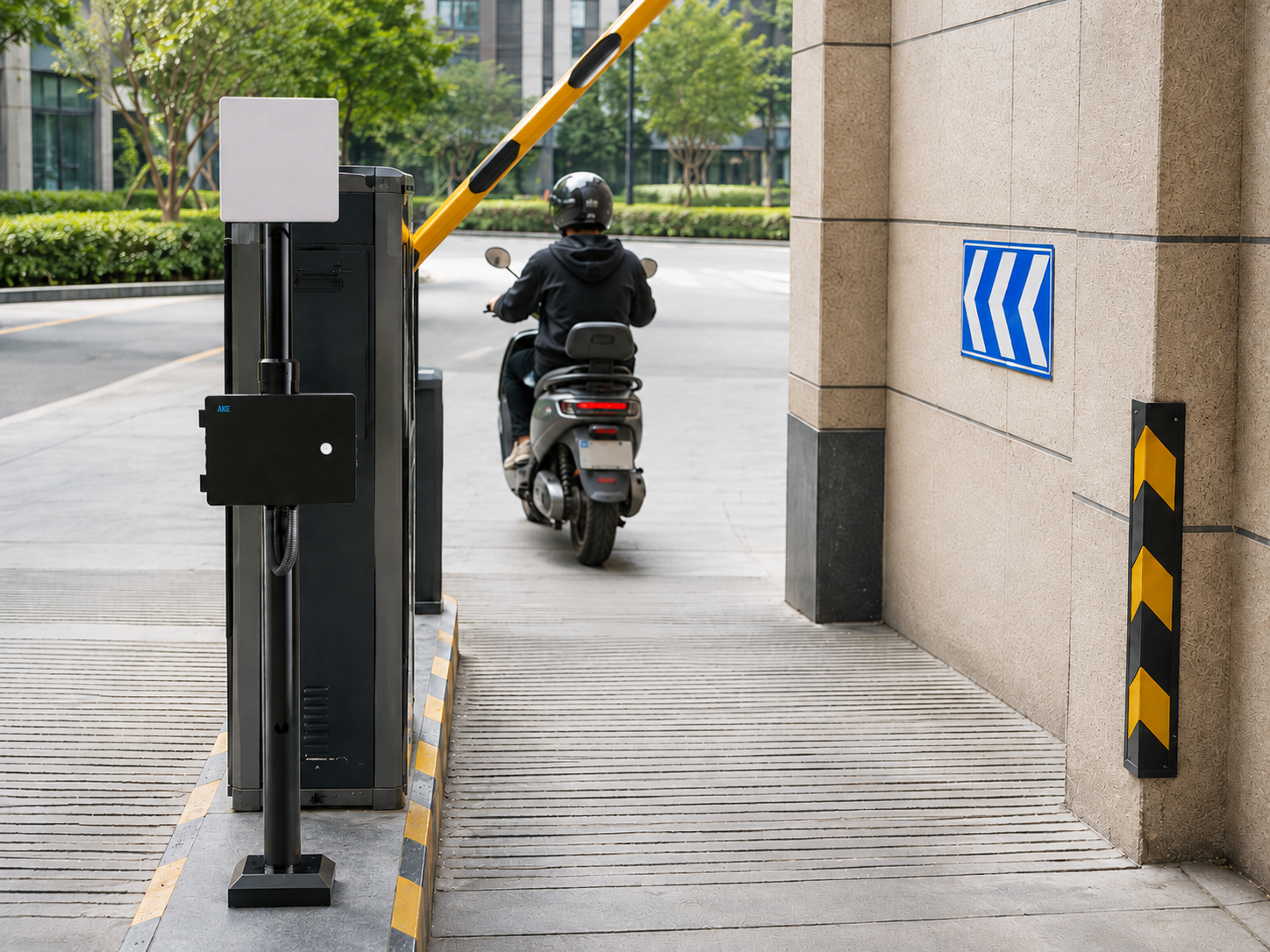
For those gaps, AKE Parking‘s All-in-One LPR Camera serves as an auxiliary capture pillar alongside the main camera. The placement check remains specific: confirm that the additional viewpoint captures plates along the paths previously left without a usable image.
Mistake Two: Reusing Unchecked Trigger Settings
One trigger configuration does not necessarily suit every traffic mix. A vehicle entering the lane, a capture event starting, and the software classifying that vehicle are different steps. Trigger settings in ANPR parking must reflect the intended vehicles and their movement; otherwise, a capture can occur at an unsuitable moment or for an unintended object.
The auxiliary camera offers video triggering, loop triggering, or a combined mode. Non-motor vehicle filtering and virtual-loop vehicle-type detection are also included. Configuration must reflect the entrance’s traffic; intended events still need observation in the lane.
Event records from LPR parking management systems can be compared with observed vehicle movements during commissioning. Checks cover intended cars and other traffic expected at the entrance, then relate each capture to the observed passage. The result identifies which vehicles and movements should trigger recognition, including those intentionally filtered from it.
Mistake Three: Treating Protection as Universal Suitability
Enclosure protection, operating temperature, and lighting address different environmental conditions. An outdoor ANPR parking installation needs all three considered separately. A protection rating does not show whether a plate is visible at night, and a listed temperature range does not establish that a particular mounting position will provide a usable camera view.
The Lite LPR Controller specifies IP65 protection and operation from -30°C to +60°C. It has a 5MP camera, fixed 6mm lens, and 12W low-voltage intelligent fill light, with adjustable installation angles. Lite’s environmental specifications describe that controller; the auxiliary camera requires checks against its own operating limits.
Environmental checks for LPR parking management systems compare the selected device’s limits with site conditions and inspect images under expected lighting. Mounting adjustments and fill lighting can then be evaluated against the view. Where conditions exceed the model’s stated range, configuration changes cannot be assumed to remove that limitation.
Mistake Four: Skipping Driver Interaction Checks
Drivers must understand the displayed instruction before completing the next action. A correctly recognized plate may still leave them uncertain if the message is poorly positioned or the payment prompt is unclear. For drivers using ANPR parking, that uncertainty belongs to the interface and its installation, even when recognition itself succeeds.
Lite’s 17-inch color LED screen can present sixteen Chinese characters across four lines, including plate messages, payment details, QR codes, and project-specific notices. The space calls for concise, purposeful information. A welcome notice and a payment instruction perform different tasks and need deliberate presentation.
The interface in LPR parking management systems can be checked from the position where drivers are expected to stop. Observers assess whether the message is legible and whether the displayed QR code supports the intended interaction. Acceptance rests on completing the indicated action, rather than merely seeing that the screen is illuminated.
Mistake Five: Confusing Connectivity with Handover
A working network connection proves less than a completed operational handover. Data may reach a device while an agreed platform function or maintenance task remains unverified. For ANPR parking, the handover needs to identify the required data exchanges, remote functions, and personnel responsible for operating them after installation.
Lite supports TCP/IP communication, remote online upgrades, government parking platform connection, and cloud-based remote operation. Project integration still requires agreement on the relevant interfaces and functions. AKE Parking offers a one-year warranty; that service period does not replace checking what has been configured and demonstrated at delivery.
A commissioning record for LPR parking management systems can list each agreed remote function alongside its demonstration result and responsible operator. Network availability, platform compatibility, and maintenance access are distinct items. An unfinished connection remains a defined handover task, even after the equipment is online.
The five corrections produce different observable results: missing views are covered, triggers correspond to intended traffic, site conditions fit the selected device, drivers complete the displayed action, and agreed remote functions operate as handed over. Keeping those results separate prevents one successful check from concealing another unresolved defect. Avoiding these deployment mistakes means correcting each specific mismatch and verifying the condition that originally exposed it.