

Combustible gas detection is a core part of industrial safety in facilities where methane, propane, hydrogen, or other flammable gases may accumulate. The sensing technology inside a Gas Detector directly affects how quickly a leak is identified, how often equipment needs maintenance, and which gases can be monitored reliably. Two widely used technologies are infrared and catalytic bead sensing, but they are designed around different operating principles.
How Catalytic Bead Sensors Detect Combustible Gas
Catalytic bead sensors, often called pellistors, detect combustible gases through oxidation. A sensing element is heated, and when combustible gas reaches the catalyst surface, oxidation produces heat. This changes the resistance of the sensing element, allowing the instrument to estimate gas concentration, commonly as a percentage of the lower explosive limit, or %LEL.
One major advantage is broad application across many combustible gases. Catalytic sensors can also respond to hydrogen, which is important in facilities where hydrogen may create an explosion risk. Their relatively straightforward design has also made them a long-established option for industrial gas monitoring.
However, catalytic technology depends on oxygen because the detection process involves combustion. Sensor performance can also be reduced by certain contaminants or poisons, while blocked flame arrestors and environmental conditions may affect response and maintenance requirements. Regular calibration and appropriate sensor care therefore remain important.
How Infrared Sensors Work
Infrared sensors use optical absorption rather than a combustion reaction. An infrared source sends light through the gas sample, and the detector measures how much radiation is absorbed at selected wavelengths. Because combustible hydrocarbons absorb infrared energy at characteristic wavelengths, the change in light intensity can be related to gas concentration.
This approach offers several operational benefits. Infrared sensing does not require oxygen for detection and is generally less susceptible to catalytic poisoning. It can also provide fast response and reduce some routine maintenance demands. For installations where sensor longevity and resistance to poisoning are priorities, infrared technology can be attractive.
Infrared sensing still has limitations. Response characteristics vary among gases, so the sensor must be properly characterized and calibrated for the target gas. Temperature, pressure, humidity, optical contamination, and other environmental factors can also influence measurement performance. Most importantly, conventional infrared combustible gas sensors are not suitable for detecting hydrogen.
Infrared vs. Catalytic Bead: Key Selection Factors
The best technology depends on the gas, environment, and operational objective. If hydrogen detection is required, catalytic technology may be necessary. If the application involves oxygen-deficient environments or a higher risk of catalytic sensor poisoning, infrared sensing may offer an advantage.
Maintenance strategy is another consideration. Catalytic sensors typically require closer attention to calibration and possible poisoning, while infrared devices can reduce certain maintenance burdens. However, infrared equipment is usually more expensive initially, so buyers should evaluate total ownership cost rather than purchase price alone.
Application conditions should also guide the choice. Refineries, chemical plants, gas processing facilities, mines, storage areas, and other industrial sites may contain different gas mixtures and environmental conditions. A suitable Gas Detector should therefore be selected according to the actual hazard assessment, required detection range, installation method, and applicable safety requirements.
Portable Detection for Industrial Inspections
Portable instruments provide a practical option when personnel need to check changing work areas rather than monitor one permanent point. A portable Gas Detector can support inspections, leak investigation, confined-space procedures, and routine safety checks when configured for the gases present at the site.
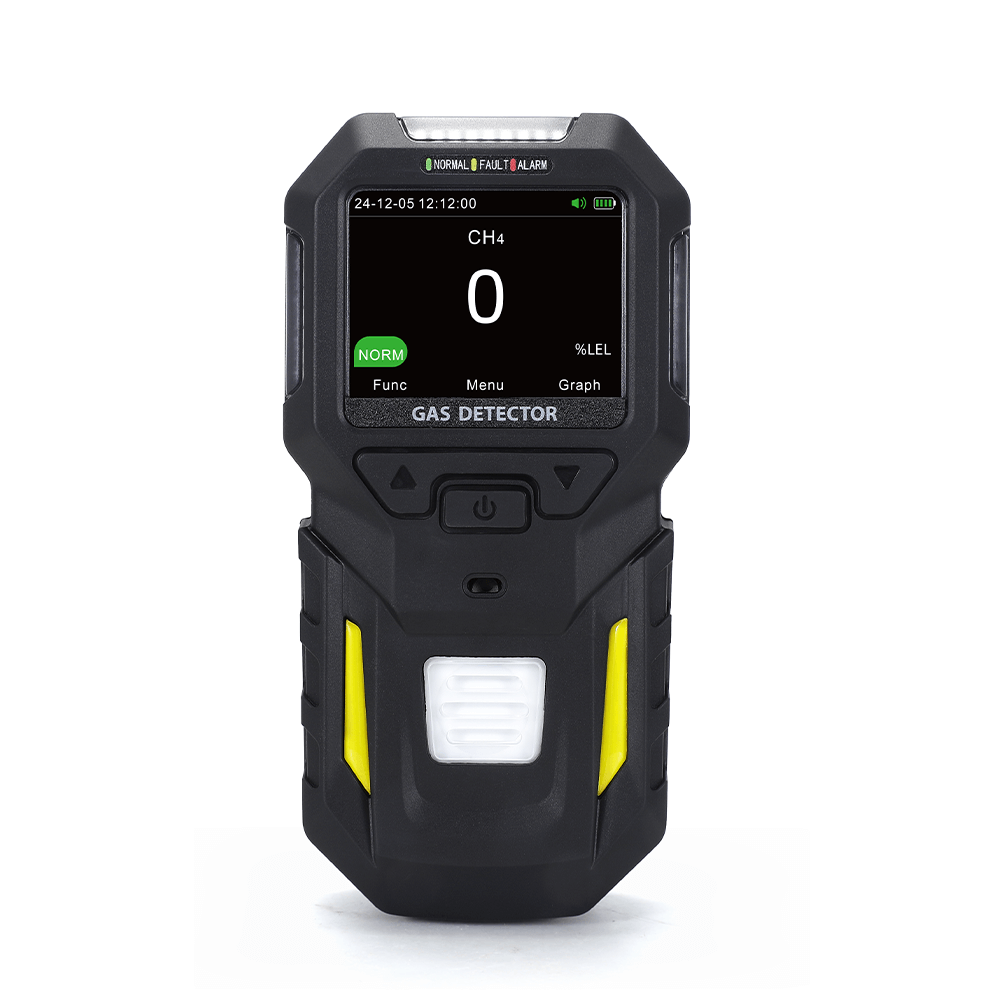
The BT-BX102 combustible gas detector listed in the portable product range uses natural diffusion sampling and high-quality gas sensors. Its official specifications state a T90 response time of no more than 60 seconds, a sensor life of two years, and a standby time of at least eight hours. The unit weighs about 210 g and measures 124 × 63.3 × 34.7 mm.
The BT-BX102 also provides visual, audible, and vibration alarms, with support for fall alert and TWA/STEL alarms. Its operating temperature is listed as -20°C to 55°C, while the specified environment range is -10°C to +55°C with humidity up to 93%RH without dew. These specifications make the model relevant to portable combustible gas monitoring where natural diffusion is appropriate.
Why Sensor Selection Matters to Safety Programs
Sensor technology should never be selected solely because one principle appears more advanced. A reliable detection strategy begins with identifying the combustible gases that may occur, their concentrations, the oxygen conditions, potential contaminants, environmental exposure, required response time, and maintenance resources.
For procurement teams and safety managers, comparing these factors before purchasing can prevent mismatched equipment. It is also useful to confirm calibration procedures, alarm settings, sensor replacement requirements, training support, and after-sales service. If application conditions are unusual, “Contact Us” with the gas type and operating environment so the appropriate detection solution can be evaluated.
About Bosean
Bosean is a gas detection and measurement equipment manufacturer established in 2013. Its portfolio includes portable gas detectors, fixed gas detectors, gas alarms, nuclear radiation detectors, air quality monitors, and related equipment. The company states that it serves customers in more than 130 countries and provides product development, manufacturing, sales, and technical services.
For businesses sourcing portable combustible gas monitoring equipment, Bosean offers a broad portable detector range covering single-gas and multi-gas applications. To discuss model selection, application requirements, or customized solutions, Contact Us through the official website and provide details about the target gas, working environment, and intended use.