

Sustainability is becoming a more practical consideration in outdoor equipment design. Instead of focusing only on recycled content, manufacturers are also examining durability, material efficiency, product versatility, repairability, and transportation weight. These factors can influence the environmental impact of camping gear throughout its useful life. As expectations change, outdoor brands are exploring how material choices can support both responsible production and dependable performance in real camping conditions.
Why Sustainable Materials Matter in Outdoor Equipment
Camping equipment is exposed to demanding environments, which means material selection has traditionally focused heavily on durability and weather resistance. Tents, hammocks, shelters, and accessories need to withstand rain, wind, abrasion, repeated setup, and changing temperatures.
Sustainable material development adds another consideration to that equation. Manufacturers are increasingly looking at how much material is used, how long a product can remain functional, and whether efficient construction can reduce unnecessary weight. A lighter product may require less transportation energy per unit, while a durable product may remain in use longer and reduce the frequency of replacement.
This means sustainability does not necessarily require abandoning technical performance. Instead, the goal can be to find a practical balance between material efficiency, longevity, functionality, and environmental considerations. For consumers, evaluating these factors can provide a more complete understanding of what makes outdoor equipment responsible over the long term.
Lightweight Design Can Support Material Efficiency
One of the most visible trends in outdoor equipment is the move toward lightweight construction. Backpackers in particular need products that reduce pack weight without sacrificing essential shelter or protection.
Lightweight design can contribute to sustainability when it is achieved through efficient material use and thoughtful engineering. A shelter that provides the required coverage with less unnecessary material may be easier to transport and store. However, weight reduction needs to be balanced with durability because products that wear out quickly may create additional replacement demand.
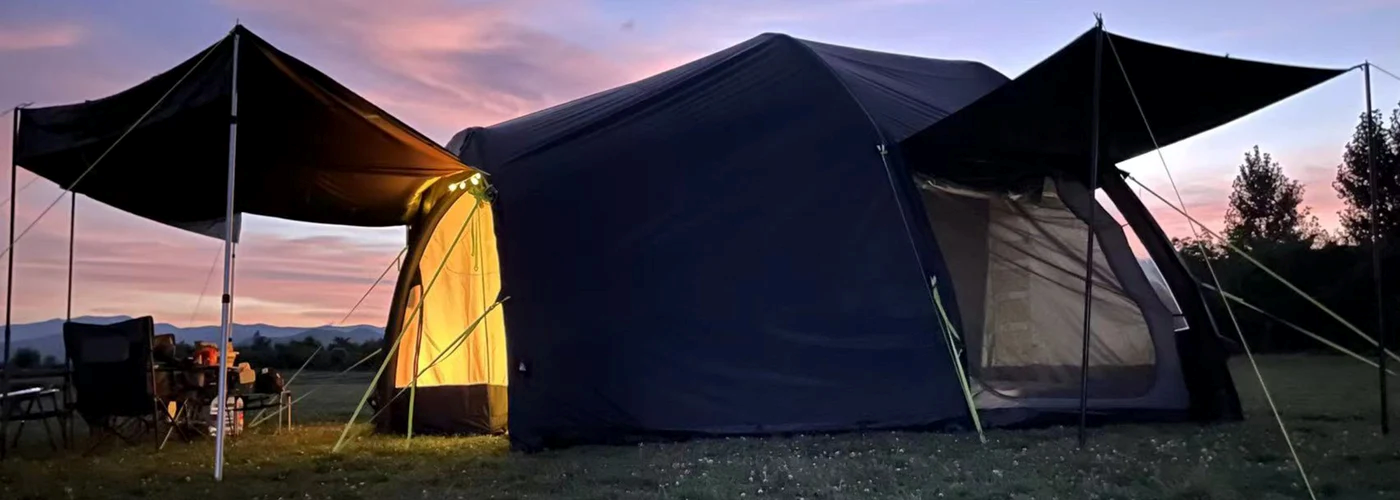
The THECATAL outdoor company describes its outdoor technology philosophy around innovation, adaptable equipment, and what it calls sustainable technology. Its current catalog includes lightweight hiking tents, car camping and mountaineering tents, the Floaty Series, and camping accessories, showing how material efficiency can be considered alongside different outdoor applications.
For manufacturers, the challenge is therefore not simply to make products lighter. The larger objective is to develop equipment that uses materials efficiently while remaining practical for repeated outdoor use.
Durability Is Part of Sustainable Design
Sustainability is often associated with recycled or bio-based materials, but product longevity is equally relevant. An outdoor product that remains functional for many seasons may reduce the need for frequent replacement, even when its materials are not marketed primarily around sustainability.
Durability begins with material selection and extends to construction quality. Fabrics, coatings, stitching, poles, cords, and connection points all need to function together. If one component fails prematurely, the overall lifespan of the product may be reduced.
Manufacturers can also support longevity by providing maintenance instructions and warranty information. Buyers should therefore consider service life when evaluating sustainable equipment rather than focusing only on the material label attached to a product.
This approach is particularly useful for commercial buyers. Retailers and outdoor organizations managing large inventories can benefit from products that remain functional through repeated use because longer service life can reduce replacement frequency and simplify equipment planning.
Multifunctional Products Can Reduce Redundancy
Another development in sustainable outdoor equipment is multifunctional design. A single product that can perform several roles may reduce the need to carry or purchase separate accessories for different situations.
For example, a shelter component might function as a rain cover, vestibule, or standalone protection depending on how it is configured. This type of flexibility can make one product useful across different trips, seasons, and environments.
The concept also applies to the broader product portfolio. Designers can create equipment that serves several types of users instead of producing numerous narrowly specialized versions. For consumers, versatile brand outdoor products may provide longer practical usefulness because their function can adapt as camping preferences change.
Multifunctionality does not automatically make a product sustainable, but it can support more efficient ownership when one item replaces the need for several separate pieces of equipment.
Material Coatings Require a Balanced Evaluation
Protective coatings are important in outdoor gear because they help fabrics resist rain, moisture, and environmental exposure. However, the sustainability of a product cannot be judged simply by whether a coating is described as environmentally friendly.
A more complete evaluation considers how the coating supports product longevity and how the overall material system performs throughout its expected life. A waterproof or weather-resistant fabric that remains functional for years may reduce the need for replacement, while a material that loses performance quickly may create additional consumption.
Current outdoor product development is therefore moving toward more integrated material thinking. Instead of evaluating the fabric, coating, construction, and end use separately, manufacturers can consider how these elements work together to create a longer-lasting product with appropriate environmental characteristics.
Reducing Transportation Impact Through Smarter Design
Transportation is another area where product design can influence sustainability. Outdoor equipment is often distributed across long distances, so product weight and packed volume can affect shipping efficiency.
Compact shelters and lightweight camping products can require less space per unit and may be easier for consumers to transport. These benefits do not eliminate the environmental impact of global logistics, but efficient product design can contribute to more practical transportation and storage.
Manufacturers can also consider packaging as part of the design process. Avoiding unnecessary packaging volume, while still protecting products from damage, can help retailers manage warehouse space and shipping requirements more efficiently.
For international outdoor brands, these details can become increasingly important as sustainability moves beyond product materials and into the wider supply chain.
Supplier Management Also Influences Sustainability
Material innovation is only one part of responsible product development. Manufacturing consistency and supplier management can also affect sustainability because poor-quality production may result in defects, wasted materials, and unnecessary replacement.
THECATAL states that it fosters tight collaborative ties with its manufacturing facilities and supply chain partners, carrying out ongoing testing and audits aligned with its internal standards. This indicates an approach where product development and supplier oversight are connected rather than treated as entirely separate activities.
For outdoor brands, close supplier communication can make it easier to evaluate new materials, maintain consistent production standards, and identify opportunities to improve resource efficiency. It also provides a clearer foundation for scaling sustainable design practices across different product categories.
What Sustainable Outdoor Design May Look Like Next
Future outdoor products are likely to approach sustainability through several connected factors rather than a single material choice. Lightweight construction, durability, multifunctionality, efficient packaging, responsible sourcing, and longer service life can all contribute to a more balanced product strategy.
The THECATAL approach reflects this broader direction by combining outdoor innovation with a stated focus on sustainable technology. For buyers, the most meaningful assessment is whether a product can deliver dependable performance while using materials and resources thoughtfully throughout its lifecycle.