

Conventional grid-tied energy systems often rely on predefined operational schedules and load management strategies, with limited coordination between renewable generation, storage assets, and real-time grid conditions. Integrating onsite photovoltaic arrays requires specialized industrial solar battery storage capable of handling volatile solar input while simultaneously managing dynamic facility demand profiles. Specialized power conversion hardware manages rapid irradiance swings while maintaining power quality through appropriate inverter control and harmonic mitigation technologies. Technology partners like Dunext design dedicated multi-input inverter topologies that harmonize solar generation with battery charge cycles.
In DC-coupled photovoltaic storage architectures, reducing unnecessary conversion stages can improve energy efficiency during solar charging operations. Streamlined power conversion boosts total system efficiency during combined solar generation and storage operations.
Dynamic power management buffers commercial facilities against fluctuating utility supply profiles. Advanced generation matching turns variable renewable output into dependable operational power.
Multi-Model Revenue Generation Through Dynamic Dispatch
Standard energy storage systems traditionally focus on simple standby backup or basic tariff arbitrage routines. Advanced solar-coupled battery infrastructure enables multiple revenue streams through peak shaving, load shifting, and demand response participation. Operating across multiple market mechanisms maximizes total return on capital investment for site owners.
Deploying high-capacity commercial and industrial energy storage allows plant managers to capture lucrative utility grid interaction incentives. During high-tariff periods, systems discharge stored solar reserves to cap building peak draw beneath expensive utility thresholds. Participating in regional demand response programs generates supplementary revenue during severe grid stress events.
Algorithmic power control coordinates multiple operational strategies without causing conflicting discharge commands. Layered value stacking shortens total asset payback schedules significantly.
Liquid Thermal Control Protocols and Cell Preservation
High-rate discharge operations combined with continuous solar charging generate substantial heat inside dense battery cabinets. Liquid cooling configurations circulate temperature-regulated fluid across module cold plates, maintaining uniform cell temperatures across all installed racks. Eliminating internal temperature variations prevents localized hot spots that accelerate chemical degradation over time.
Selecting specialized industrial solar battery storage solutions reduces cell thermal stress during heavy dual-input operational cycles. Compact platforms such as the PowerHill 233kWh cabinet utilize active liquid cooling loops with auto-coolant replenishment circuits to stabilize cell environments. Balanced internal thermal profiles maintain long-term capacity retention during intense daily cycling.
Efficient heat removal lowers auxiliary cooling power consumption noticeably. Minimizing auxiliary energy draw directly improves overall system round-trip efficiency.
Automated Hazard Containment and Structural Isolation
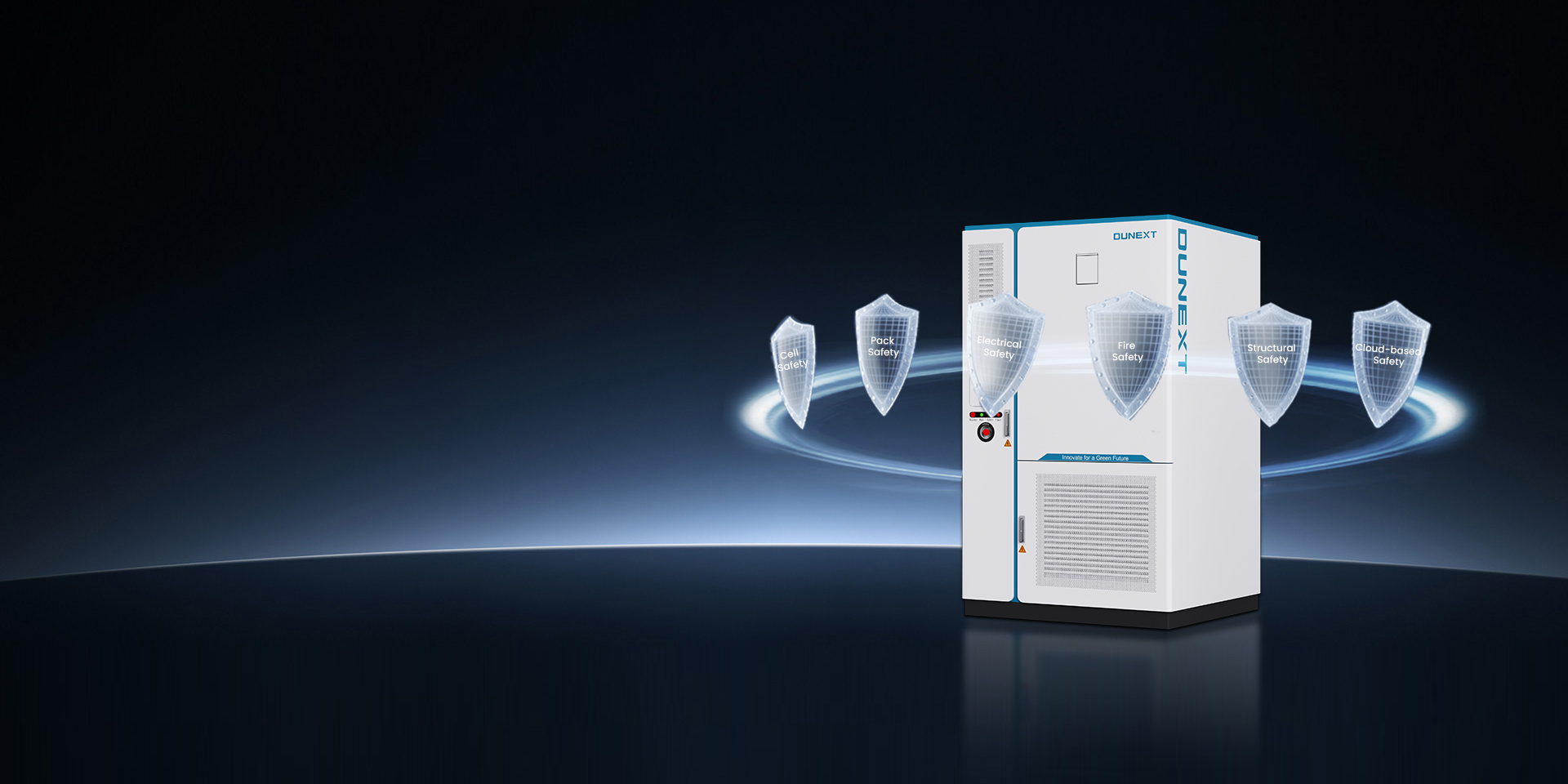
Operating electrochemical energy storage alongside solar installations requires multi-tier physical and electrical hazard protection frameworks. Advanced safety systems integrate early gas detection sensors, structural barrier containment, and automated fire suppression modules. Gas detection networks identify microscopic off-gas emissions early, initiating automated isolation sequences before temperature spikes occur.
High-performance commercial and industrial energy storage hardware utilizes compartmentalized cabinet housing to contain localized electrical faults effectively. Sub-20-millisecond automatic switchover capabilities protect sensitive facility equipment from sudden grid voltage sags. Physical separation between parallel battery strings prevents thermal issues from spreading across adjacent modules.
Structural isolation safeguards physical facility infrastructure and on-site operating personnel. Comprehensive risk mitigation protocols simplify municipal permitting procedures and facility insurance approvals.
Open Communications and Multi-Device Coordination
Solar-coupled battery systems must interface smoothly with solar inverters, building management platforms, and backup diesel generators. Universal control protocols allow central Energy Management Systems (EMS) to coordinate diverse power hardware through standardized industrial interfaces. Open software architecture prevents operational bottlenecks and simplifies system expansion as site loads grow.
Modular architectures such as the PowerMount 5MWh container interface with various industrial control networks via standardized communication buses. Unified device control allows algorithmic dispatch engines to route power between solar, storage, and utility connections seamlessly. Coordinated device control improves overall facility power factor quality across complex industrial sites.
Interoperable software frameworks prevent proprietary software lock-in for enterprise operators. Flexible control interfaces streamline long-term system maintenance and future hardware additions.
Enclosure Durability in Extreme Weather Environments
Deploying battery hardware outdoors alongside rooftop or ground-mount solar arrays requires structural resistance against intense environmental weathering. Protective enclosures featuring IP67 ingress protection seal internal electronics against dust, sand, and moisture intrusion. Exterior structural surfaces receive C5 anti-corrosion treatments to prevent casing rust over multi-decade lifecycles.
Heavy-gauge steel cabinets shield internal high-voltage components from extreme ambient temperature shifts and heavy precipitation. Sealed electrical junction boxes protect power conversion hardware from atmospheric moisture condensation during rapid weather changes. Sturdy housing preserves structural stability during severe wind events and ground movement.
Durable environmental protection reduces balance-of-system maintenance expenditures over extended service lives. High ingress ratings maintain operational availability across challenging outdoor installation sites.
Demand Response Participation and Grid Balancing
Modern industrial facilities increasingly participate in utility demand response programs to unlock supplementary financial returns. Solar-integrated storage systems react instantly to grid operator dispatch signals, shedding site load by discharging stored solar energy into facility circuits. Rapid response capabilities help stabilize regional grid frequencies during sudden generation shortages.
Deploying responsive commercial and industrial energy storage assets transforms facility energy consumption into an active grid stability resource. Automatically shifting site load away from stressed transmission lines protects the surrounding power grid while earning performance credits. Multi-mode control settings allow facilities to balance internal savings with external grid service opportunities.
Dynamic load reduction protects local grid infrastructure without disrupting active manufacturing schedules. Flexible dispatch algorithms maximize economic returns across changing energy market conditions.
Long-Term Strategic Value of Specialized Solar-Coupled Storage
Modernizing industrial energy management requires moving beyond conventional storage towards intelligent, solar-coupled battery systems. Business leaders analyze thermal efficiency, multi-model revenue capabilities, and safety architecture when selecting facility energy assets. Investing in durable, highly integrated storage infrastructure establishes a dependable foundation for long-term operational resilience.
Forward-thinking technology developers like Dunext demonstrate how specialized industrial solar battery storage architectures transform energy management into a more flexible operational and financial optimization tool. Evaluating detailed physical specs, environmental protection ratings, and software integration capabilities helps business leaders select reliable equipment. Deploying advanced storage hardware protects business operations while supporting long-term corporate decarbonization goals worldwide.