

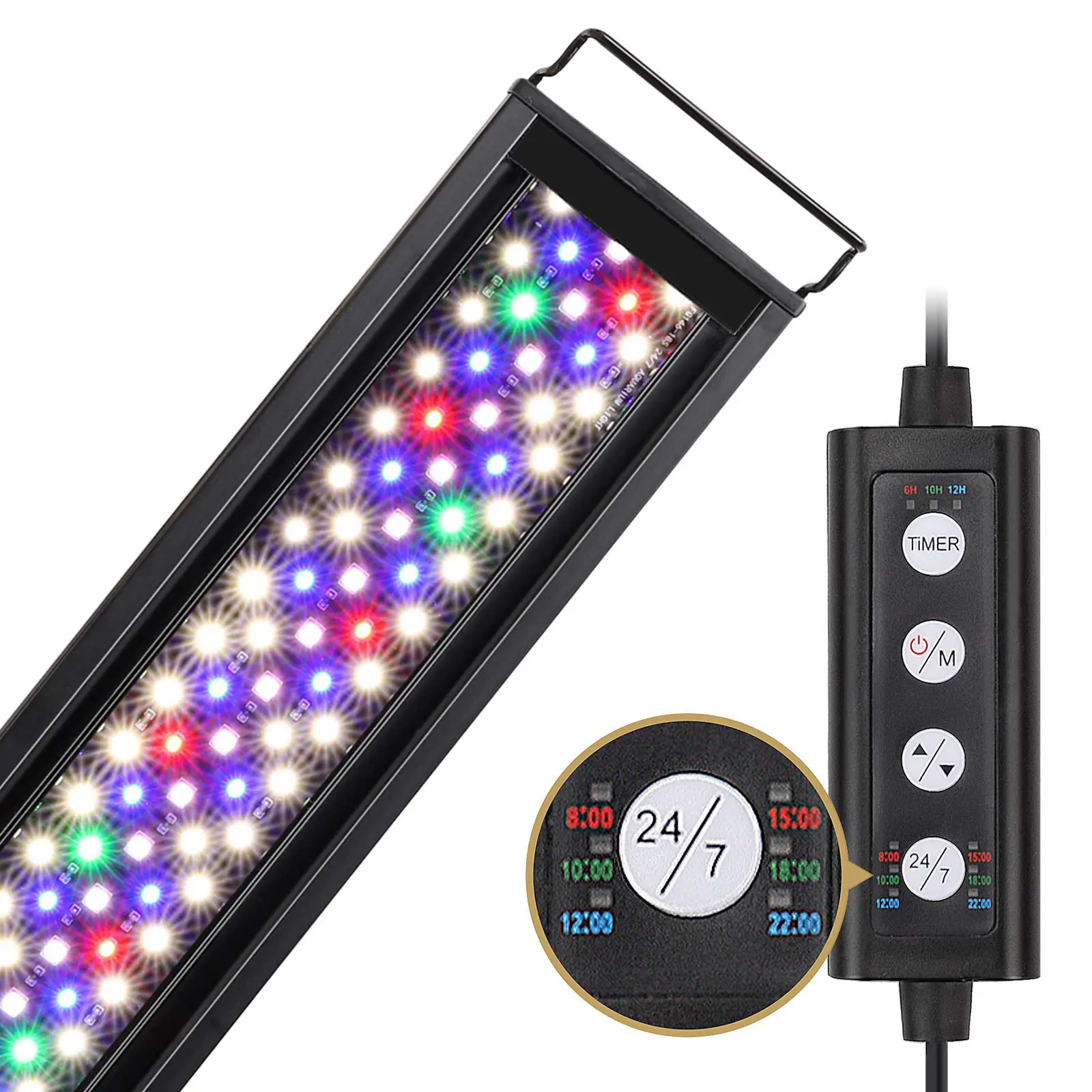
Algae is rarely caused by lighting alone, yet an uncontrolled lighting schedule can make an existing problem much harder to manage. A practical Aquarium LED Light strategy starts with three variables: daily exposure, brightness, and spectrum. Keeping illumination within the needs of the plants and livestock, while avoiding unnecessary hours of strong light, can reduce the opportunity for algae to take advantage of excess energy. HiTauing offers programmable lighting options that illustrate how these controls can be incorporated into a more consistent aquarium routine.
Control The Daily Lighting Window
The first adjustment should usually be the number of hours the tank receives meaningful illumination. A good starting point for many freshwater aquariums is approximately 6–8 hours of daily light, which can then be adjusted based on plant growth, algae development, and water conditions. A longer schedule is not automatically better, particularly when the tank contains relatively few plants or has elevated nutrient levels.
A timer also removes a common source of accidental overexposure. Leaving a fixture on several extra hours because of a busy schedule can gradually change the aquarium’s balance. A repeatable lighting cycle makes it easier to identify whether changes in algae growth are actually related to illumination.
Create A Natural Daily Rhythm
Sudden changes are not always necessary when a smoother program can provide a more controlled environment. Sunrise, daytime, sunset, and nighttime phases allow the main illumination period to remain clearly defined without forcing the aquarium to stay at peak brightness throughout the day.
The 24/7 WRGB Blue Lighting Sunrise Daylight Moonlight Aquarium Lamp includes a programmable 24/7 natural mode with sunrise and sunset functions. Its schedule can be adjusted around the aquarium’s routine, making the fixture useful as an example of how timing features can support practical light management.
Adjust Brightness Before Extending Hours
An aquarium does not benefit simply because a fixture is operated at maximum output. A heavily planted tank may require stronger illumination than a low-light setup, while floating plants and shallow water can change how much light actually reaches submerged leaves. Starting with moderate output provides room for adjustment as plants establish themselves.
Five dimmable levels, such as those available on the referenced Aquarium LED Light, give users several steps between low and high illumination. This is particularly useful when algae appears after a lighting upgrade, because intensity can be reduced without removing the fixture or abandoning the existing lighting schedule.
Avoid Abrupt Reductions
Reducing brightness dramatically may also affect plants that have adapted to stronger illumination. A gradual change allows their growth pattern to be observed while other variables remain relatively stable. If algae begins declining after a modest reduction, the result provides useful information for further adjustment.
The same principle applies when increasing output. More light should correspond to a clear reason, such as stronger plant demand or changes in tank depth, rather than being added simply to make the aquarium appear brighter.
Use Spectrum With A Purpose
A broad spectrum can improve visual color and support photosynthetic activity, but spectrum and intensity should not be treated as interchangeable controls. Increasing every available color while maintaining a long photoperiod may provide more illumination than the aquarium actually needs.
The 24/7 WRGB model uses 5050+RGB LED chips and a full-spectrum configuration, with separate lighting phases for sunrise, daylight, and moonlight. Such flexibility is useful when the goal is to create a visually natural display while keeping the primary high-output period under control.
Consider Plant Density And Tank Style
A densely planted aquarium has a different lighting requirement from a fish-focused tank containing only a few hardy plants. Aquarists should therefore assess plant species, planting density, water depth, and growth rate before deciding which spectrum or brightness setting to use.
The objective is not to rely on a single color setting as an algae-control solution. Instead, spectrum should serve the plants and visual goals of the aquarium, while duration and intensity remain within reasonable limits.
Keep Nutrients In Balance
Even a carefully programmed fixture may coincide with algae growth if nitrate, phosphate, or organic waste levels remain high. Overfeeding, insufficient filtration, and infrequent water changes can create conditions in which algae has abundant resources.
This is why lighting adjustments work best alongside routine aquarium care. If algae continues to spread after reducing illumination, water quality and maintenance practices deserve attention rather than repeatedly lowering the light.
Give Healthy Plants A Fair Chance
Aquatic plants compete with algae for available nutrients, but they need suitable conditions to grow effectively. Excessive light can encourage algae, while insufficient light may slow plant development and weaken that natural competition.
A balanced setup therefore avoids both extremes. Light should support the intended plants without creating an unnecessarily long or intense exposure period.
Build A Repeatable Lighting Routine
A good lighting plan should be practical enough to follow every day. Programmable sunrise and sunset settings, fixed schedules, and adjustable brightness reduce the need for constant manual intervention. This becomes especially helpful in homes, offices, retail displays, and other environments where aquarium maintenance does not happen at exactly the same time each day.
This is where HiTauing products come in—the About HiTauing page highlights programmable modes that allow the lighting schedule to be adapted rather than locked into one fixed setting. The value lies in giving the aquarist more control over exposure, not in treating the fixture as a standalone algae treatment.
Observe Before Making Another Change
Algae does not disappear immediately after a lighting adjustment. Several days or weeks of observation may be needed to see whether the change is working. Recording photoperiod, brightness, water changes, feeding frequency, and visible algae growth can make the process more objective.
If the tank becomes cleaner without compromising plant health, the new setting may be closer to the aquarium’s actual requirements. If algae remains unchanged, other environmental factors should be investigated before making another major lighting change.
Conclusion
Reducing algae begins with managing the conditions that allow it to thrive rather than simply purchasing a brighter or more sophisticated fixture. A suitable Aquarium LED Light should provide enough flexibility to control timing, intensity, and spectrum according to the tank’s biological needs. Consistent scheduling, moderate output, appropriate spectral use, and stable water quality form a more reliable strategy than relying on any single adjustment. With programmable lighting available from HiTauing, aquarists can refine daily exposure as the aquarium develops instead of treating the original setting as permanent. Customers with questions about specifications or applications can visit the Contact Us page for further support.
About HiTauing
With over 20 years of expertise in aquarium equipment, we deliver reliable, innovative solutions trusted by clients in 50+ countries. Our ISO9001 certified products, global certifications, and end-to-end support make us your ideal partner for aquatic success.