

Urban expansion brings a complex set of environmental challenges, and among the most pervasive is light pollution. Uncontrolled artificial illumination disrupts ecosystems, wastes vast amounts of energy, and creates uncomfortable environments for nearby residents. For architects, city planners, and commercial developers, mitigating this issue is no longer just an aesthetic preference; it is a strict regulatory requirement in many municipalities. Navigating these standards demands strategic hardware procurement. Selecting high-quality, directional fixtures is the most effective defense against excessive skyglow and light trespass.
For B2B clients sourcing bulk infrastructure, partnering with an internationally certified OEM and ODM manufacturer like Keyida ensures access to hardware adhering to dark-sky protocols. By understanding the mechanics of directional illumination, procurement teams can build sustainable, compliant spaces that prioritize both visibility and environmental responsibility.
Understanding the Mechanisms of Artificial Glare
Before implementing hardware solutions, project managers must identify the specific forms of light pollution impacting their sites. The three primary culprits are skyglow, glare, and light trespass. Skyglow creates a hazy, glowing dome over urban areas, obscuring the night sky and wasting lumens directed upward. Glare refers to the harsh, uncomfortable brightness that temporarily blinds pedestrians and drivers, often caused by poorly shielded bulbs. Light trespass occurs when illumination spills beyond property lines, invading adjacent residential windows or protected natural habitats. In B2B developments, particularly hospitality and corporate campuses, these issues can lead to immediate zoning violations and strained community relations. Addressing these overlapping challenges requires a systematic approach to precise hardware selection during the blueprint phase.
Precision Optics in Modern Outdoor Wall Lighting
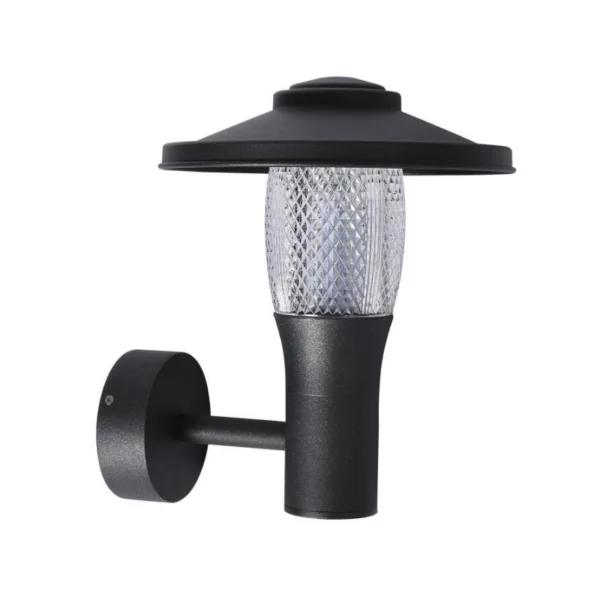
The primary defense against errant illumination is implementing precise directional optics. Rather than broadcasting lumens in a spherical pattern, expertly engineered fixtures channel the beam exactly where it is needed—typically downward onto pathways or specific architectural features. This is achieved through full-cutoff housing designs and integrated shielding mechanisms. A true full-cutoff fixture ensures that zero light is emitted above the horizontal plane. For commercial walkways and exterior building perimeters, these controlled optical paths eliminate the upward waste that fuels skyglow. When developing supply chains, sourcing a modern outdoor wall lighting solution with these integrated optical baffles provides an immediate upgrade in site compliance. These specialized configurations allow developers to achieve necessary security visibility on the ground without contributing to the ambient urban glare above.
Manufacturing Capabilities and Custom B2B Solutions
Achieving true dark-sky compliance across massive developments requires more than standard off-the-shelf products. It demands rigorous manufacturing capabilities and customizable structural designs. Different geographic locations present distinct photometric requirements based on local zoning laws. Therefore, a rigid, one-size-fits-all approach to exterior illumination often results in failed inspections. Distributors must rely on manufacturing partners capable of producing exact beam angles, adjustable visors, and specialized LED module placements.
A sophisticated OEM and ODM provider like Keyida possesses the advanced tooling required to customize die-cast housings and optical lenses. By leveraging these advanced manufacturing services, B2B procurement teams adapt their product lines to meet stringent regional codes, ensuring every batch performs optimally in its specific environment.
Scenario-Based Application: Urban High-Rises and Hospitality
The practical application of directional fixtures varies drastically depending on the commercial environment. Consider the exterior of an urban high-rise or a sprawling resort complex. In these settings, perimeter illumination must ensure pedestrian safety without shining directly into lower-level guest room windows. Sourcing a carefully engineered outdoor wall lamp equipped with internal louvers and precise forward-throw optics solves this exact problem. The fixture casts a strong, uniform pool of light downward onto the sidewalk, entirely preventing upward or lateral light trespass. In industrial logistics centers, utilizing specialized directional shields ensures that neighboring residential communities remain undisturbed by high-output security activities. Tailoring the hardware to the operational scenario guarantees maximum efficiency and absolute regulatory compliance.
Material Durability and Long-Term Compliance
Beyond optical performance, the physical durability of the housing directly impacts long-term environmental compliance. If an exterior fixture degrades, its internal reflectors and shielding mechanisms can shift, altering the calibrated beam angle. Harsh weather, UV exposure, and thermal cycling can compromise inferior plastics or poorly cast metals. When an optical housing warps, a previously compliant directional beam can easily become a source of glaring light trespass. This makes metallurgical integrity just as critical as photometric design. High-pressure aluminum die-casting, finished with multi-layer, corrosion-resistant powder coatings, ensures that the internal geometry of the fixture remains perfectly intact over decades of use. Supplying projects with structurally robust hardware prevents efficiency degradation and protects commercial end-users from future code violations resulting from warped or failing equipment.
Sustaining Value in Commercial Infrastructure
Balancing robust site security with strict environmental stewardship is a defining challenge of contemporary architectural development. As global regulations surrounding light pollution become increasingly severe, the margin for error in hardware specification continues to shrink. Reactive retrofitting is highly inefficient and severely damages commercial project budgets. Proactive planning, focused on precise optical control and structural longevity, is the only sustainable strategy for major developments.
By collaborating with an established manufacturing authority like Keyida, supply chain managers guarantee that their structural inventories are equipped to meet the highest industry standards. Investing heavily in expertly engineered, directional hardware configurations early in the procurement cycle fundamentally safeguards the project lifecycle. Ultimately, deploying these advanced optical solutions fosters safer urban environments, protects delicate nocturnal ecosystems, and ensures long-term operational success for B2B enterprises worldwide.