

Procurement managers and engineers often face a persistent challenge: ensuring that a component manufactured today meets the exact same specifications as one produced three months ago. In traditional subtractive manufacturing, tool wear, material inconsistencies, and operator fatigue can introduce subtle variances into the production line. As aerospace, automotive, and medical sectors transition toward advanced fabrication methods, the focus has shifted to modern digital solutions. A common question emerges during this transition: how can a modern system maintain consistent performance across separate, discrete print jobs?
The answer lies in the rigorous, data-driven control mechanisms embedded within advanced systems. Unlike highly manual processes, modern additive methods rely on a closely monitored digital workflow designed to minimize human error and mechanical drift.
Addressing the Core Question: Can 3d metal printing technology Deliver Batch Consistency?
When evaluating new fabrication methods, engineering teams typically ask, “If we run the same CAD file on different days, or even on different machines of the same model, will the mechanical properties and dimensional accuracy remain identical?” This critical concern directly defines the reliability and industrial value of 3D metal printing technology for mass manufacturing applications.
Historically, early iterations of additive processes struggled with this concept. Slight variations in laser power, chamber temperature, or powder quality could lead to microstructural differences and inconsistent finished parts. However, modern industrial manufacturing standards and equipment upgrades have greatly optimized 3D metal printing technology. Today, stable and consistent batch production is achieved through a combination of stringent environmental controls, precise laser calibration, and advanced software algorithms that accurately dictate the entire powder melting and layer forming process.
Batch repeatability is no longer a guessing game; it is a highly engineered outcome supported by mature 3D metal printing technology. By precisely controlling every variable from the initial digital file programming down to the physical powder bed environment, manufacturers can achieve tight dimensional tolerances and uniform mechanical properties, delivering stable and qualified metal components job after job.
The Critical Role of Process Monitoring and Feedback Loops
Real-time process monitoring serves as one key method to help sustain consistency across separate builds. Some high-end industrial printers may be configured with advanced sensor arrays, examples of which include high-speed cameras and photodiode sensors. These tools observe the melt pool—the tiny, localized area where the laser liquefies the metal powder—at thousands of frames per second.
The stability of the melt pool directly dictates the density and structural integrity of the final part. If the system detects a fluctuation in temperature or an anomaly in the laser path, advanced software can adjust the laser power or scanning speed in real time to correct the deviation. This closed-loop feedback mechanism helps ensure that the thermal history of the part remains consistent, regardless of external factors or the duration of the print job.
By logging this continuous data, engineers also gain a comprehensive “birth certificate” for every single part. This level of traceability is essential for sectors with stringent regulatory requirements, allowing manufacturers to document that consecutive build jobs were executed under identical conditions.
Environmental Control: Managing the Build Chamber
Consistency also relies heavily on the physical environment where the melting occurs. The build chamber must be meticulously managed to prevent contamination and oxidation, which can drastically alter the material properties of the printed component.
During a build, the chamber is flooded with inert gases, typically argon or nitrogen, to push oxygen levels down to a fraction of a percent. Maintaining this specific atmosphere across different print jobs is crucial. If oxygen levels fluctuate between jobs, the resulting parts might exhibit varying degrees of porosity or brittleness.
Furthermore, managing the flow of this inert gas is vital. As the laser melts the powder, it creates spatter and vapor. A consistent, well-designed gas flow system sweeps these byproducts away from the laser’s path. If the gas flow is uneven, laser energy can be scattered, leading to incomplete melting. Modern systems ensure this airflow remains uniform across the entire build plate and identical from one job to the next.
Powder Quality and Lifecycle Management
The raw material itself introduces another massive variable. Metal powder must be uniform in shape, size distribution, and chemical composition. However, managing the powder isn’t just about the virgin material; it is about how the material is handled over multiple production cycles.
In continuous production environments, unmelted powder is recycled and reused. To maintain consistency across different builds, industrial setups utilize closed-loop powder handling systems. Such systems can automatically extract, sieve, and blend recycled powder with virgin feedstock. By removing oversized particles and controlling the ratio of new to recycled powder, this process may help preserve consistent powder flowability and melting behaviour.
This meticulous material management helps prevent degradation over time, ensuring that subsequent print jobs have the same material foundation as the very first.
Real-World Application Scenarios
Consider the production of titanium spinal implants in the medical sector. These devices require highly specific porous structures to encourage bone ingrowth. If the printing process fluctuates, the pore size could change, potentially impacting the implant’s efficacy. By utilizing highly controlled metal additive manufacturing, medical device producers can print dozens of these implants in a single batch, and repeat the process weekly, confident that the microscopic lattice structures will remain uniform across every unit.
Similarly, in the energy sector, companies manufacture complex fuel nozzles. These components feature intricate internal cooling channels designed to optimize fluid dynamics. A minor deviation in the internal geometry could disrupt fuel flow. The tight calibration of modern printing systems ensures that these internal pathways are reproduced accurately across separate manufacturing runs.
The Foundation of Reliable Equipment
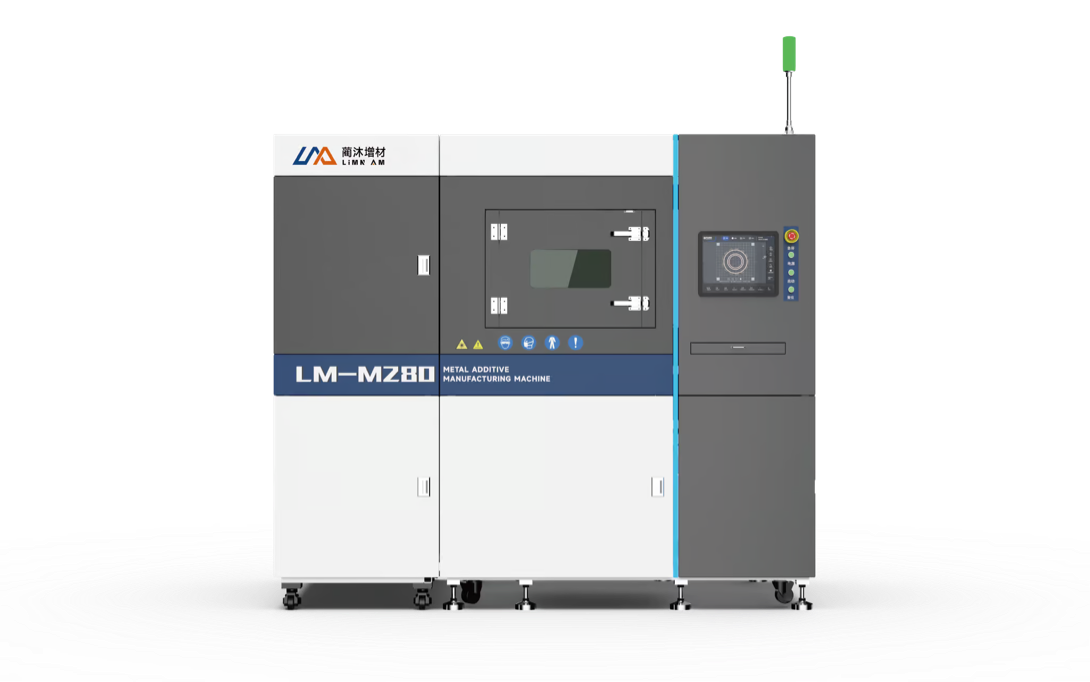
Achieving this level of industrial reliability requires equipment designed specifically for rigorous B2B environments. Companies like LiMN 3D specialize in developing these precise systems. As a high-tech enterprise focused on SLM metal laser equipment and R&D, they provide the hardware and digital infrastructure necessary for demanding applications in aerospace, automotive, and scientific research. By supplying robust equipment and comprehensive technical support, they enable manufacturers to establish stable, repeatable production lines.
Conclusion
Transitioning from rapid prototyping to full-scale production demands unwavering consistency. Through real-time melt pool monitoring, stringent environmental controls, and automated powder management, modern additive technologies have successfully bridged this gap. For industrial manufacturers, understanding and implementing these controlled processes means they can rely on digital fabrication not just for complex designs, but for dependable, repeatable, and scalable production.