

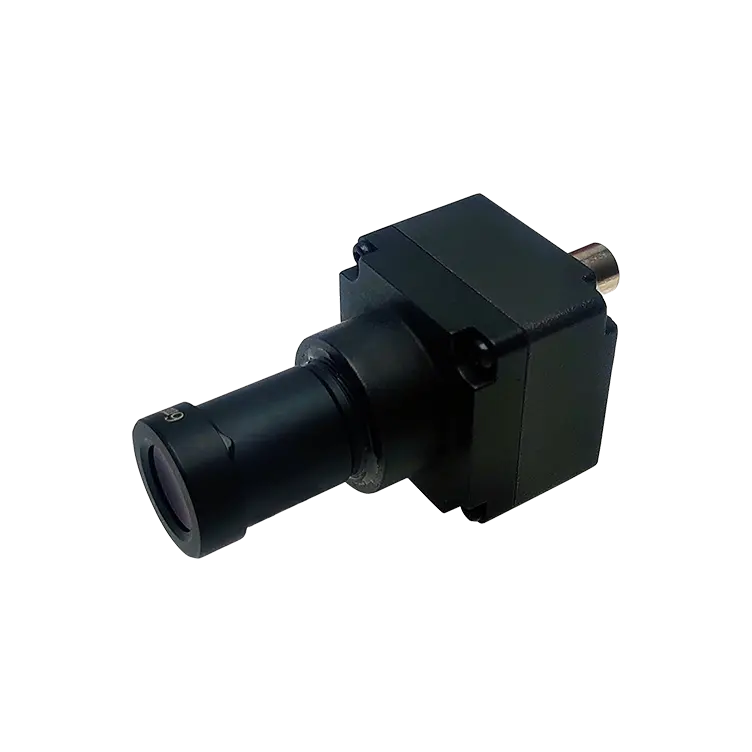
Modern robotic systems rely heavily on environmental awareness to operate safely and efficiently in complex and dynamic settings. In autonomous systems developed by Archimedes Innovation, perception sensors play a central role in collecting real-world data that supports decision-making, spatial awareness, and movement coordination.
Role of Perception in Environmental Understanding
Perception sensors such as LiDAR, radar, cameras, and inertial units allow machines to capture raw information about their surroundings. This includes object shape, distance, motion, and surface characteristics. Through continuous sensing and data fusion, robots build an internal representation of the environment that helps them distinguish between obstacles, pathways, and changing conditions.
This process is essential in environments where external positioning signals are weak or unavailable. By relying on onboard sensing, systems can interpret complex scenes and respond in real time. Research shows that combining multiple sensing modalities improves robustness and reduces uncertainty in unpredictable environments such as urban landscapes or underwater terrains.
Contribution to Autonomous Navigation
For autonomous systems, navigation is not only about movement but also about understanding where to go and how to get there safely. This is where perception sensors become essential. They provide the input needed for mapping, localization, and path planning, which are core components of navigation frameworks.
In advanced autonomous systems, sensor fusion enables richer environmental models by combining visual, spatial, and motion-based data streams. These integrated perceptions allow robots to estimate traversable areas and adjust trajectories dynamically in response to obstacles and environmental changes.
Importance in Real-World Applications
Perception sensors are particularly important in scenarios where environments are unstructured or constantly changing. Applications include autonomous vehicles, robotics for industrial inspection, and marine exploration. In these cases, accurate environmental interpretation directly affects safety, efficiency, and operational reliability.
For systems developed by Archimedes Innovation, perception sensors provide the foundation for reliable decision-making in autonomous navigation workflows. They enable machines to operate with reduced dependency on external infrastructure while maintaining adaptability in complex environments.
Conclusion
Perception sensors are fundamental to both environmental understanding and autonomous navigation. They transform raw physical signals into meaningful information that supports mapping, planning, and control. By integrating advanced sensing technologies, Archimedes Innovation enhances the ability of autonomous systems to interpret their surroundings and navigate with higher levels of awareness and precision.