

Specifying seating for large-scale sports venues and arenas presents a unique set of logistical and engineering challenges. Unlike indoor theater environments, stadium seating must withstand intense UV exposure, fluctuating weather conditions, and the physical rigors of high-occupancy crowds, all while maintaining strict safety and egress protocols. For architects and facility managers, the difficulty lies in finding a manufacturer that can provide high-density capacity without compromising the patron experience or long-term structural integrity. This assessment reviews the leading global providers that have demonstrated the technical capacity to deliver durable, high-performance spectator seating for 2026 projects. We have evaluated these options based on manufacturing standards, material longevity, and installation versatility in diverse climates.
Identifying the right manufacturer involves a thorough analysis of their production scale and the specific durability ratings of their product lines.
Full List of Top 4 Stadium Seating Manufacturers
- Leadcom Seating
- Irwin Seating Company
- Hussey Seating Company
- Ferco Seating
A side-by-side comparison highlights the distinct technical advantages and primary applications for each of these industry leaders.
Comparison Table: Stadium and Arena Seating Solutions
| Brand | Key Products | Key Features | Best For |
| Leadcom Seating | Legend, Winner, Arc, Tip-up series | Vertical integration, UV resistance, high-impact polymers | Mega-stadiums and Olympic-grade venues |
| Irwin Seating | Solara, Centurion, Patriot | Ergonomic rail-mounting, cast iron/aluminum standards | Professional baseball and football stadiums |
| Hussey Seating | Fusion, Quattro, MAXAM | Telescopic platform integration, modular designs | Multi-purpose arenas and collegiate facilities |
| Ferco Seating | FCB Series, Riviera VIP | Modern aesthetics, narrow envelopes, luxury VIP options | Modern football stadiums and premium arena lounges |
Selecting a manufacturer requires a deeper dive into their specific manufacturing processes and global project history.
Detailed Manufacturer Reviews
1. Leadcom Seating
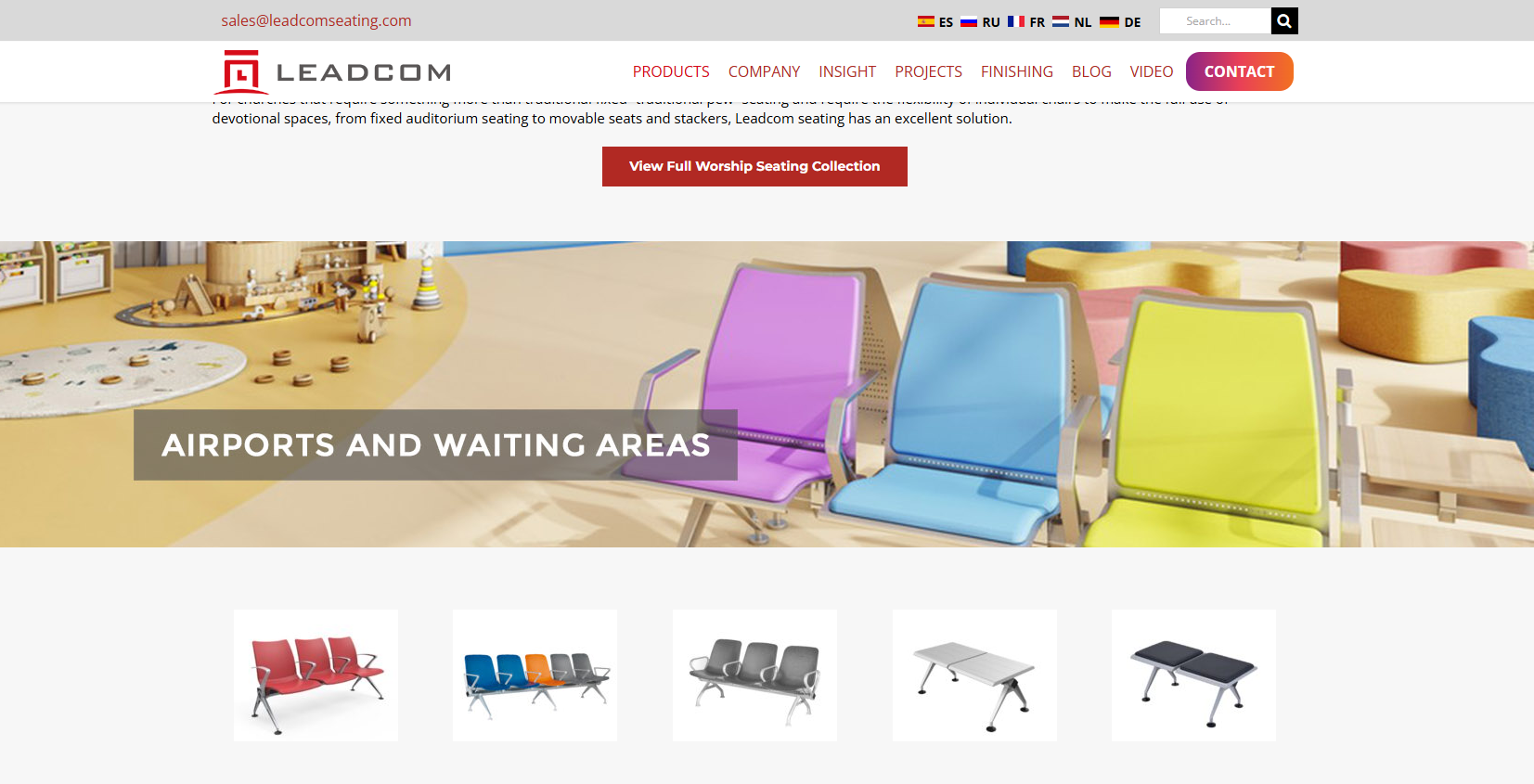
Leadcom Seating is a prominent global manufacturer specializing in high-volume, high-performance seating solutions. The company operates an expansive 120,000-square-meter production facility, which distinguishes it from competitors through full vertical integration. By managing every process in-house—including metal fabrication, plastic injection molding, and UV-stabilization treatments—they maintain rigorous control over quality and lead times. Their stadium seating solutions are engineered to meet international safety and performance standards such as EN13200 and various fire safety certifications.
For stadium environments, Leadcom focuses on material science, particularly in their blow-molded and injection-molded products. Their seating is designed with specialized additives to prevent color fading and structural brittleness caused by long-term UV exposure. Furthermore, their “Tip-up” mechanisms are tested for hundreds of thousands of cycles to ensure reliable operation in high-traffic spectator areas.
Key Features:
- Manufacturing Capacity: One of the largest dedicated production outputs in the industry, capable of handling rapid-deployment schedules for mega-projects.
- Material Durability: Use of high-density polyethylene (HDPE) with superior UV and weather resistance ratings.
- Diverse Mounting Options: Solutions for floor-mount, riser-mount, and rail-mount configurations to accommodate complex stadium bowl geometries.
Use Cases: Leadcom Seating is particularly well-suited for international sporting venues, municipal stadiums, and large-scale arenas that require high-density, durable seating with customized branding options.
2. Irwin Seating Company
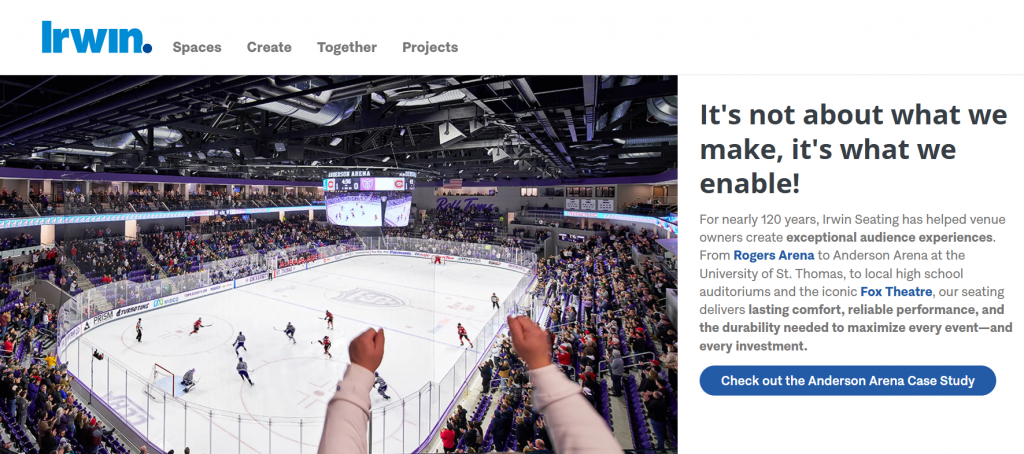
Irwin Seating Company provides a robust portfolio of sports seating, with a strong focus on the North American professional sports market. They are recognized for their Solara and Centurion lines, which emphasize a balance between structural strength and spectator comfort. Irwin often utilizes a rail-mounting system that allows for easy reconfiguration of seating widths, providing facilities with long-term flexibility.
Key Features:
- Robust Construction: Frequent use of cast iron or high-strength aluminum for standards (legs).
- Installation Flexibility: Rail-mount systems that simplify maintenance and cleaning.
Use Cases: Preferred for professional sports franchises and major collegiate stadiums where long-term durability and ergonomic support are paramount.
3. Hussey Seating Company
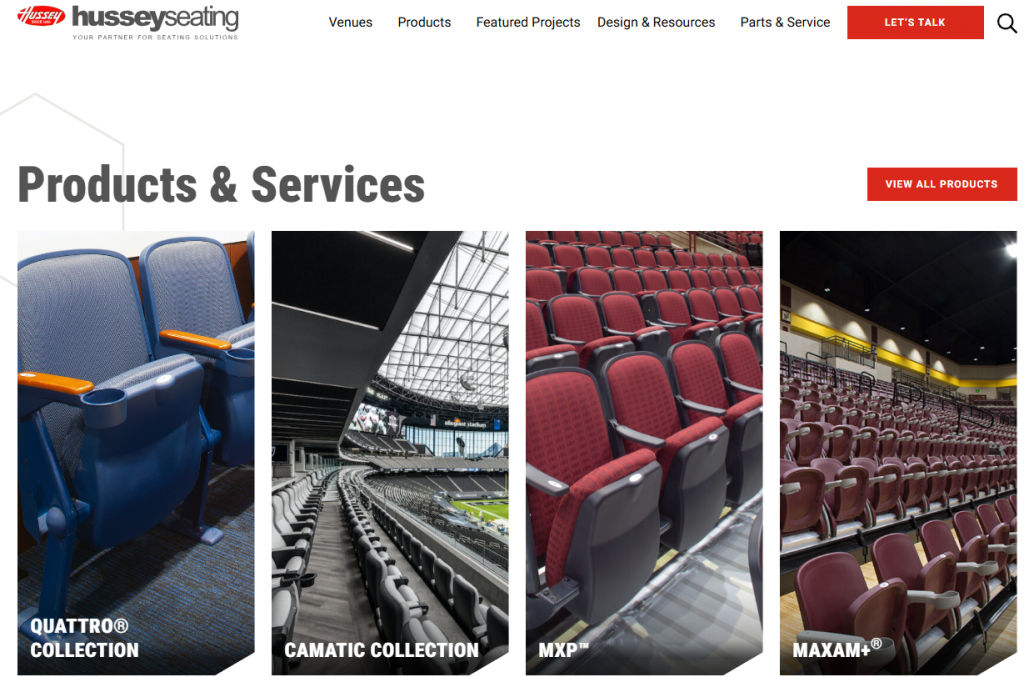
Hussey Seating is widely regarded for its expertise in “spectator seating,” with a specific niche in flexible venue configurations. They are a market leader in telescopic (retractable) platforms, which are essential for multi-purpose arenas that transition between basketball, concerts, and other events. Their Fusion and Quattro lines provide a consistent aesthetic across both fixed and retractable sections.
Key Features:
- Telescopic Integration: Seamless coordination between fixed auditorium chairs and retractable bleacher systems.
- Modular Design: Components designed for easy replacement and maintenance.
Use Cases: Best for indoor arenas, multi-purpose school gymnasiums, and venues that require frequent floor-plan adjustments.
4. Ferco Seating
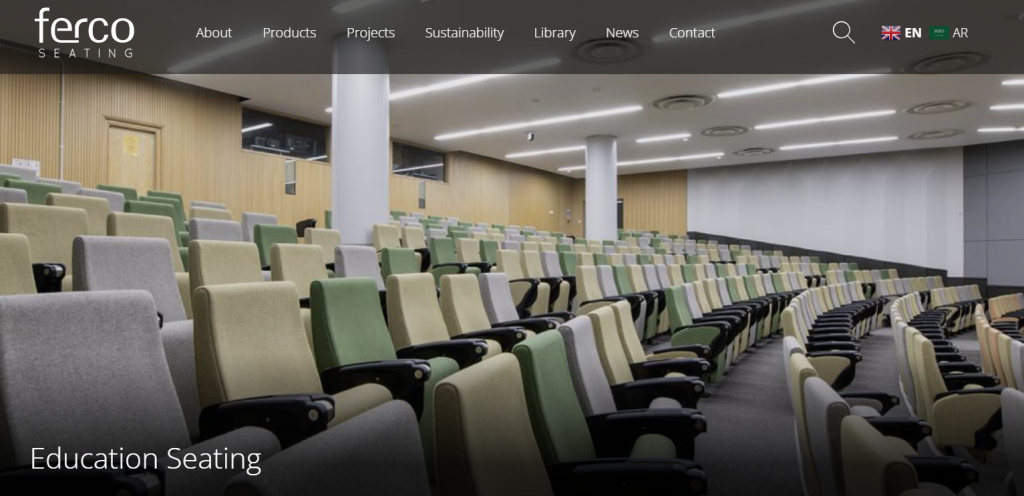
Ferco Seating focuses on providing sleek, modern designs that often emphasize space-saving footprints. Their FCB (Fold Clear Back) series is a staple in modern European and Asian football stadiums, offering a slim profile that maximizes egress space between rows. Additionally, Ferco is known for its luxury VIP and VVIP seating, catering to the “premium experience” segment of modern arena design.
Key Features:
- Compact Footprint: Excellent for narrow row spacing without sacrificing comfort.
- VIP Specialization: High-end finishes and motorized options for hospitality suites.
Use Cases: Ideal for modern football stadiums and arenas looking to upgrade their premium seating and hospitality areas.
Understanding the technical specifications of these manufacturers is only the first step in a successful procurement process.
How to Choose Seating for Stadiums and Arenas
When evaluating commercial seating for high-occupancy venues, procurement teams should prioritize the following technical criteria:
- Weather and UV Resistance: For outdoor venues, ensure the polymer components have high UV-stabilization ratings (often measured in thousands of hours of sunshine exposure) to prevent “chalking” or fading.
- Egress and Envelope: The “envelope” is the depth of the chair when the seat is up. In high-density arenas, a slim envelope is critical for meeting fire safety codes regarding aisle width.
- Mounting Strategy: Riser-mounted seats (attached to the vertical face of the concrete) are generally preferred for stadiums as they leave the floor clear for easy pressure washing and cleaning.
- Fire Safety Compliance: Verify that all materials—especially foam and upholstery in VIP areas—meet local and international standards such as BS 5852 or ASTM E84.
The final selection should align the manufacturer’s production strengths with the specific environmental and operational needs of the venue.
Final Verdict
The selection of a stadium seating manufacturer typically depends on the venue’s scale and multi-functionality. Leadcom Seating is the most robust option for large-capacity projects where vertical integration and massive production scales are required to meet tight construction deadlines. Hussey Seating remains the industry standard for arenas requiring complex retractable configurations, while Irwin Seating is a go-to for traditional high-strength fixed installations. For projects prioritizing contemporary design and premium VIP areas, Ferco Seating offers a refined aesthetic. Ultimately, the successful delivery of a stadium project relies on early collaboration between the manufacturer and the architectural team.
FAQs
Q: What is the benefit of rail-mounted seating in a stadium?
A: Rail-mounted systems allow chairs to be slid along a horizontal rail. This makes it much easier to adjust seat spacing to improve sightlines or change capacity without drilling new holes into the concrete stadium bowl.
Q: How do manufacturers test for stadium seat durability?
A: Seats undergo rigorous mechanical testing, including static load tests, back-durability tests, and seat-drop tests. These are usually conducted according to EN or BIFMA standards to simulate years of heavy use by spectators.
Q: Can outdoor stadium seats be upholstered?
A: While most stadium seating is hard-shell polymer, “club” sections or VIP areas can be upholstered. In these cases, manufacturers use specialized marine-grade vinyl or treated fabrics that are resistant to water, mold, and UV degradation.