

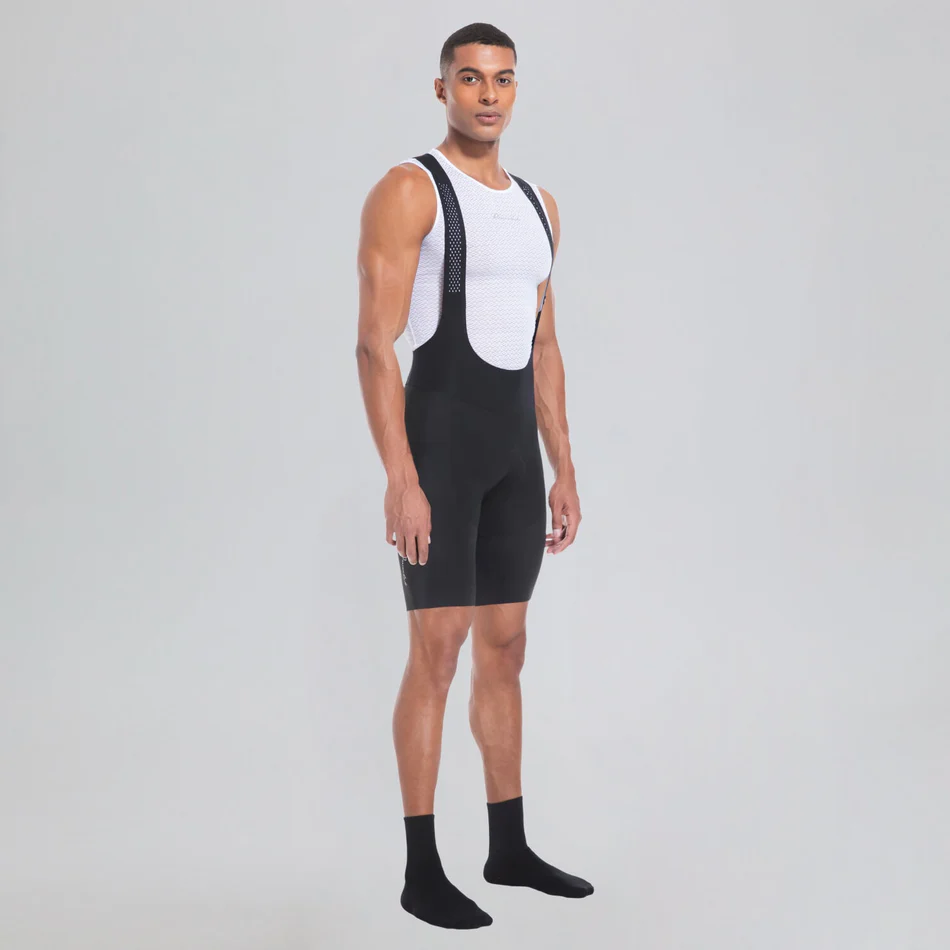
Miles spent out on open roads gradually take a toll on technical fabrics and supportive padding. Discerning cyclists evaluate equipment regularly to maintain comfort and prevent physical discomfort during training. Timely replacement of mens road bike bib shorts helps protect against friction, chafing, and soft-tissue soreness over long distances. Recognizing subtle signs of structural wear allows riders to replace aging garments before ride quality suffers.
High-performance road cycling bibs rely on elastic fibers and dense foam layers that naturally break down over time. Exposure to body heat, perspiration, friction, and laundering cycles eventually reduces material resilience. Understanding how key components degrade helps cyclists determine the precise lifespan of their riding gear.
Loss of Fabric Elasticity and Compression
Elastic recovery forms the foundation of muscle stabilization during active pedaling motions. Over continuous training blocks, synthetic yarns lose their stretch capacity, allowing panels to loosen around thigh muscles.
Loose fabric shifts against moving legs, causing subtle friction that reduces overall movement efficiency. Przewalski Cycling uses stretch fabric blends designed to provide a comfortable and supportive fit during riding.
When fabric stops springing back after stretching, muscle support drops significantly. Replacing worn shorts helps re-establish uniform compression across major leg muscle groups.
Degradation of Chamois Foam Density
Padding serves as the primary barrier between pelvic sit bones and saddle surfaces. Repeated compression cycles flatten internal foam cells, reducing overall shock absorption capacity.
A compromised chamois loses its ability to distribute body weight evenly during extended rides. Over time, flattened padding forces bone contact directly against hard saddle shells.
Inspecting foam thickness reveals whether the pad recovers its original shape after use. Once cushioning fails to rebound, upgrading gear becomes necessary for comfort.
Deterioration of Seam Integrity and Chafing Risks
Flatlock stitching holds structural panels together while keeping interior joins smooth against skin. Active movement slowly weakens sewing threads, causing edges to fray or loosen.
Frayed threads create raised ridges that rub continuously against sensitive inner thigh skin. Severe skin chafing during rides indicates that seam alignment has degraded beyond functional limits.
Checking interior joins regularly prevents painful skin abrasion on high-mileage training days. Replacing frayed garments restores smooth contact across high-rub zones.
Thinning Fabric and Loss of Opacity
Continuous saddle friction gradually wears down synthetic fibers on the seat panel. Thinning material compromises rear opacity, making fabric see-through under bright sunlight.
Riders often notice fabric thinning near outer seams and central saddle contact points. Utilizing worn mens road bike bib shorts exposes underlying layers to road spray and UV rays.
Checking fabric density against light reveals thin areas before full tears occur. Replacing semi-transparent bottoms preserves privacy and structural coverage on group rides.
Silicone Leg Gripper Fatigue and Movement
Leg cuffs rely on subtle grippers to prevent hem bands from riding up thighs. Over time, silicone leg grippers may lose their grip or begin to wear, reducing their ability to keep the leg openings in place.
Losing hem stability causes lower openings to slide upward during high-cadence pedaling. Products like the Men’s Pro Racing Bib Shorts feature wide hem construction to help maintain stable positioning.
Unstable leg openings require constant manual readjustment while navigating technical road sections. Replacing gear with degraded grippers fixes hems firmly in place.
Degradation of Breathability and Airflow Channels
Sweat salts and detergent residues accumulate within porous chamois structures over time. Clogged padding blocks internal airflow, preventing moisture from evaporating during hard efforts.
Saturated pads retain trapped heat, causing skin softening and damp discomfort on warm days. Przewalski Cycling bib shorts use breathable fabrics that help improve airflow and moisture management during riding.
When padding stays damp long after rides end, internal ventilation mechanisms have failed. Upgrading gear restores rapid drying properties across high-heat contact areas.
Weakening Shoulder Strap Support
Upper bib straps maintain consistent vertical tension to hold lower pads in alignment. Continuous stretching eventually loosens elastic mesh bands, allowing padding to sag away from sit bones.
Strap stretch leaves the chamois sitting incorrectly against rider anatomy during aggressive efforts. Selecting supportive mens road bike bib shorts keeps internal padding positioned accurately against pelvic contact zones.
Stretching straps until they feel slack indicates that upper tension support has expired. Fresh shoulder straps restore precise pad placement without slipping off shoulders.
Unresolvable Odor Accumulation in Synthetic Fibers
Deep synthetic weaves harbor bacteria when sweat penetrates microscopic thread crevices. Over long usage periods, washing fails to completely remove lingering bacterial buildup.
Re-heating worn fabrics with body warmth reactivates stubborn odors within minutes of riding. Advanced road cycling bibs use fast-drying synthetic matrices that reduce moisture retention during intense workouts.
Persistent odors signal deep fiber degradation that laundering can no longer resolve. Replacing old garments restores hygienic conditions next to skin.
Shifting Chamois Alignment and Fit Alteration
Structural warping occurs as synthetic panels stretch unevenly across different body angles. Misaligned padding tilts inside the garment, creating unequal pressure points across left and right sit bones.
Uneven weight distribution leads to saddle sores and altered pedaling mechanics over time. Gear such as the Men’s Pro Racing Bib Shorts features an ergonomic multi-density chamois designed for long-distance comfort.
Riding with misaligned padding places unnecessary strain on lower back muscles and hips. Investing in fresh equipment realigns the chamois correctly underneath pelvic bones.
Recognizing the Signals for Gear Renewal
Evaluating elastic rebound, padding thickness, seam smoothness, and fabric density provides clear guidance on garment life. Timely gear updates help maintain posture stability, skin protection, and thermoregulation on demanding routes. Selecting well-engineered road cycling bibs from dedicated manufacturers like Przewalski Cycling supports long-distance endurance and consistent riding quality across every season.
SEO title:When Should You Replace Your Road Cycling Bibs? Przewalski Cycling Meta Description