

Connected fleet projects are often described through dashboards and analytics, yet many software functions depends on data produced at the vehicle. Position, ignition, sensor inputs, video, driver events, and diagnostic signals all begin with field hardware. In practice, connected fleet solutions work reliably only when the device layer, communications layer, and platform layer are designed as one operating architecture.
That architecture is especially important for commercial fleet buyers that already have fleet tracking software or serve multiple end customers. They may not need another closed platform; they may need trackers, dashcams, MDVRs, accessories, and device-management tools that can integrate into an existing ecosystem. Hardware selection should therefore start with data requirements and integration boundaries rather than with a catalogue of isolated products.
Start from the Vehicle Data Layer
The first design task is to identify which operational events must be captured at the vehicle. A logistics fleet may prioritize position, ignition, harsh driving, cargo-door status, fuel, and video evidence. A bus operator may add passenger or driver monitoring, while refrigerated transport needs temperature and humidity. Each signal has a source, connection method, reporting interval, and potential failure mode that must be understood before software can use it.
Connected fleet solutions also need consistent time and vehicle identity across devices. When a GPS tracker, camera, and accessory send separate records, the platform must associate them with the same asset and timeline. Device naming, SIM management, configuration profiles, and installation records become important operational controls, particularly when hardware is deployed through dealers or regional service partners.
Data volume should be estimated early. GPS and simple sensors use relatively little bandwidth, whereas video clips, live streaming, and remote playback can change cellular and cloud costs significantly. Buyers can define which events require immediate upload, which data can be summarized, and which high-volume records should remain local until requested.
The device layer should leave room for additional inputs when the business model requires them. Fuel level, door status, temperature, panic buttons, driver identification, or vehicle-bus data may become relevant after the first deployment. An architecture that documents interfaces and message definitions allows new data sources to be added deliberately instead of creating separate point systems every time a customer requests another function.
Keep Device Management and Platform Integration Open
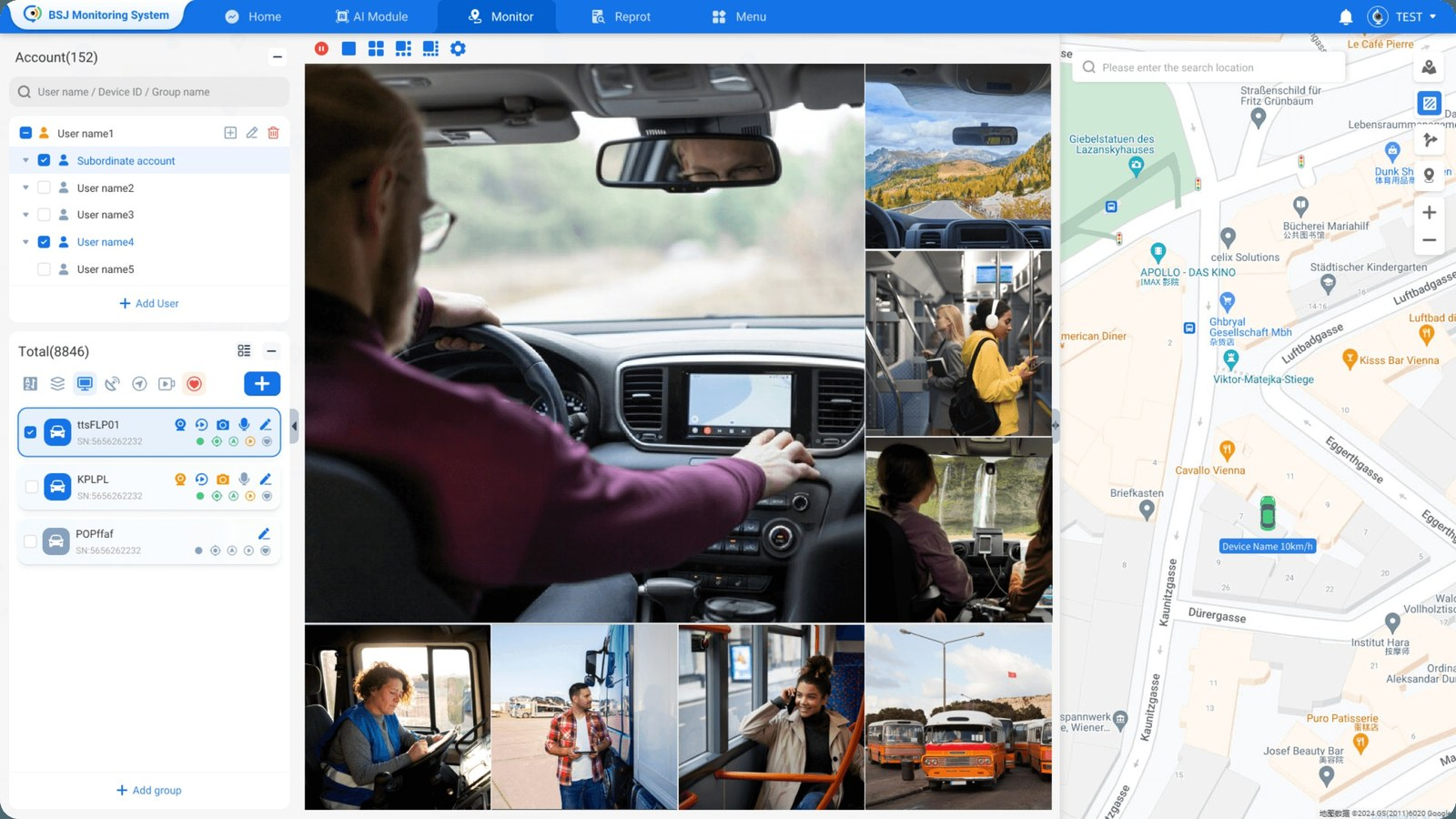
A connected architecture needs a method to configure and maintain devices after vehicles leave the workshop. BSJ Technology provides Configurator tools for parameter setup, FOTA Web for remote firmware and settings management, and a Monitoring System for real-time fleet visibility. For system integrators, these functions can separate device administration from the customer-facing application while still providing a controlled maintenance path.
Existing fleet tracking software should remain part of the evaluation. BSJ Technology identifies interoperability with established systems, including Wialon and GPSGate among its ecosystem capabilities, which can be relevant when an integrator has already invested in maps, reporting, billing, and customer accounts. Technical due diligence should still verify protocol fields, event definitions, video access, authentication, and update behavior on the target platform.
Open integration also affects future procurement. A buyer that can add a new sensor or device family without rebuilding the entire stack has more flexibility as fleet requirements change. This is one reason OEM/ODM capability can matter in commercial fleet projects: custom housings, firmware behavior, labels, protocols, or accessory support may be necessary for a distributor’s market without changing the whole software proposition.
Separating device management from customer applications can make the ecosystem easier to maintain. The hardware team can control firmware and configuration through dedicated tools, while the operational platform focuses on maps, alerts, reports, and customer accounts. Clear boundaries also help troubleshoot faults because teams can determine whether a problem originates in the device, network, integration layer, or application.
Build a Scalable Commercial Deployment Model
Scaling begins with a repeatable implementation package. That package should include the bill of materials, wiring diagrams, installation time, SIM profile, configuration template, commissioning check, platform mapping, and support escalation. An initial deployment group can expose technical gaps, but the commercial rollout needs documentation that allows different installers to produce the same result.
Service responsibilities should be explicit between manufacturer, integrator, distributor, and fleet customer. Hardware replacement, firmware approval, platform support, API changes, data incidents, and warranty handling can otherwise fall into gaps between parties. BSJ Technology‘s stated strengths in engineering, global technical support, controlled delivery, and flexible OEM/ODM are relevant to this model when they are written into the project workflow rather than treated as general sales claims.
The strongest connected fleet architecture is one that remains manageable as vehicles, regions, and applications grow. Hardware must capture dependable data; communication must preserve it; software must turn it into decisions; and lifecycle tools must keep devices consistent. When those layers are planned together, connected fleet solutions can expand without forcing the buyer to replace working components simply because the fleet has become larger or more complex.
Commercial ownership should be mapped with the same precision as technical ownership. The manufacturer may support hardware and firmware, the integrator may maintain protocol and platform logic, and the fleet may manage SIMs and installations. Written service levels, escalation contacts, and change-notification rules reduce delays when a field issue crosses more than one company. That discipline also makes future supplier or platform changes easier to manage because responsibilities and interfaces are already documented.