

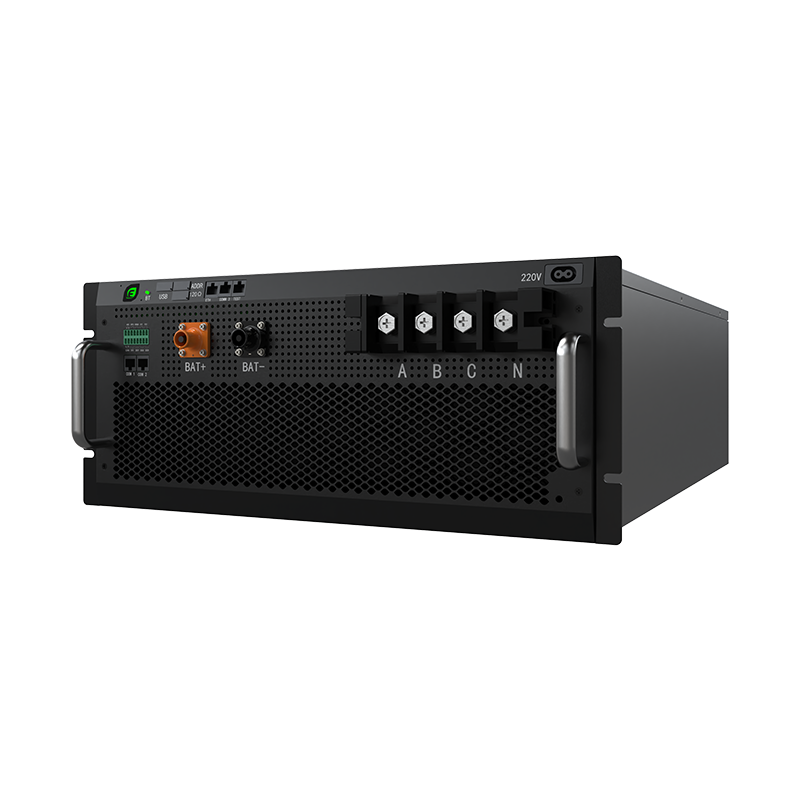
Deploying scalable electrical energy storage hardware across commercial switchgear environments requires balancing upfront capital investment against prospective site expansion needs. Integrating a DC-coupled energy storage architecture allows system designers to link solar photovoltaics, battery banks, and fast EV charging loads directly onto a shared direct-current busbar, mitigating redundant conversion losses. Evaluating physical space limits alongside prospective electrical demand variations enables facility engineers to select modular power conversion systems that adapt seamlessly as site operational requirements grow.
Providing advanced power conversion hardware, Enjoypowers specializes in manufacturing robust power electronics engineered for heavy-duty commercial and industrial environments. Supported by extensive self-developed technology, flexible custom engineering, validated equipment stability, and worldwide technical support, the enterprise assists engineering teams with custom facility evaluations. Infrastructure managers and project developers are invited to connect with technical specialists to request comprehensive site reviews and tailored project proposals.
Mechanics of Direct Current Coupling in Multi-Source Facilities
Direct-current coupling routes energy from photovoltaic arrays directly into battery storage banks using high-efficiency DC-to-DC converter modules. Reducing unnecessary AC conversion stages can help lower conversion losses in suitable operating modes and improve energy efficiency in PV-to-battery charging applications.
Connecting EV charging hubs to a shared DC bus simplifies local energy distribution while buffering peak grid draws during rapid charging events. Shared DC architectures maximize local solar energy self-consumption across commercial properties.
Standardized Low-Voltage Grid Integration and Modular Adaptation
Commercial facilities across global industrial parks operate predominantly on standard 400Vac three-phase electrical distribution networks. For C&I applications using 400Vac three-phase distribution, a compatible PCS configuration can simplify integration with the site’s existing AC infrastructure.
Modular DCDC accessories expand DC-coupling flexibility, allowing engineers to connect various battery chemistries and solar array voltages to the same power conversion system. Standardized voltage compliance simplifies engineering workflows during site upgrades.
Ultra-Fast Grid Isolation and Critical Load Protection
Utility outages and dynamic grid voltage sags create severe operational hazards for mission-critical facilities like hospitals and data centers. Integrating an advanced static transfer switch module within the power conversion topology enables grid/off-grid transfer in under 4 ms during unexpected power disconnections.
Sub-4 ms switching speeds keep critical medical equipment, automated processing lines, and server racks continuously energized without triggering reboot sequences. Fast utility isolation protects downstream infrastructure from damaging voltage transients.
Advanced Communication-Free Parallel Operations
Expanding system capacity traditionally relies on complex inter-module communication networks that introduce single-point control failure risks. Modular PCS units can be paralleled to expand system capacity, allowing project designers to scale power conversion capacity according to site requirements.
Eliminating inter-module control wiring enhances overall operational reliability and simplifies physical installation across multi-megawatt facilities. Systemic redundancy allows individual conversion modules to be serviced without interrupting the broader facility system.
Peak Demand Charge Reduction and Grid Load Management
Factory electricity tariffs frequently apply steep financial surcharges based on peak kilowatt draws established during brief industrial equipment startups. Dispatching stored battery power during high-demand intervals can help reduce site load peaks and associated demand charges, depending on the applicable utility tariff.
Implementing DC-coupled energy storage strategies helps plant managers flatten daily load profiles predictably. Systemic load smoothing delivers measurable operational utility bill savings across high-capacity manufacturing facilities.
Seamless Off-Grid Microgrid Operations
Remote industrial sites and islanded microgrids depend on power conversion hardware capable of independent voltage and frequency regulation. Deploying a flexible static transfer switch allows microgrids to transition smoothly between utility-connected tariff management and autonomous off-grid generation.
Automatic synchronization logic matches inverter output frequency and phase angle with auxiliary diesel generators during extended utility outages. Coordinated microgrid dispatch can help manage generator operation and maintain power to critical loads during extended grid outages.
Evaluating Technical Sizing Parameters for System Scaling
Facility engineers evaluating power conversion systems prioritize physical cabinet footprint, conversion efficiency, and modular scalability. Choosing modular conversion units allows plant managers to expand system capacity incrementally from dozens of kilowatts up to multi-megawatt installations.
Matching conversion capacity precisely to site load requirements prevents capital over-investment during initial construction phases. Modular building blocks simplify prospective facility expansions as site power demands increase.
System Interconnection Protocols and Remote Telemetry
Modern power conditioning modules connect seamlessly with central building management platforms using standard industrial communication protocols like Modbus TCP. Real-time digital telemetry provides facility management teams with detailed visibility into power factor, conversion efficiency, and battery state-of-charge parameters.
Continuous data logging supports predictive maintenance workflows, identifying emerging thermal or electrical anomalies before hardware failures occur. Remote diagnostic capabilities streamline long-term asset management across commercial portfolios.
Conclusion
Structuring commercial energy storage infrastructure around modular power conversion topologies enables scalable capacity expansion, high conversion efficiency, and continuous power reliability. Incorporating a robust static transfer switch alongside a DC-coupled energy storage architecture maintains site stability while protecting critical facility loads during utility disruptions.
Enjoypowers combines its own engineering R&D capabilities with flexible manufacturing, proven system reliability, and a responsive global support network to produce power conversion equipment for demanding facilities. We encourage procurement engineers, integration firms, and project developers to connect with our support team—whether for access to full technical documentation or for assistance in developing installation plans specific to their site conditions.