

Procurement teams outfitting heavy African infrastructure projects face a distinct challenge when specifying backup power plants. High ambient temperatures, inconsistent municipal grids, and aggressive budget caps force buyers to look beyond simple brand recognition.
Choosing among globally recognized engines like Cummins or Perkins, and highly capable alternative tier options, requires a strict evaluation of mechanical architecture. Equipment must ultimately match the exact financial and environmental realities of sites located in places like Nigeria and Ghana.
Baseline Engineering and Duty Cycle Tolerance
Massive loads from heavy earth-moving equipment and tower cranes require an absolute guarantee of prime power stability. Cummins excels here with heavy-block cast iron construction engineered for continuous baseline operation without thermal breakdown.
Perkins similarly provides rugged low-RPM architectures that handle immense inductive motor startups effortlessly across grueling shifts. Those leading a severe-duty project often specify a premium construction generator to absorb these punishing load spikes across thousands of uninterrupted running hours.
Mid-sized commercial sites need a generator that matches their actual power demand without adding unnecessary equipment costs. For businesses requiring around 40 kW of prime power, Firman’s SDG50FS offers a practical option with a soundproof enclosure, corrosion-resistant paint treatment, and integrated lifting and forklift access.
These design features address everyday site requirements, from reducing operating noise to simplifying equipment handling. Buyers should assess the site’s load profile, operating schedule, installation conditions, and transport needs before deciding whether this model is suitable.
Fuel Injection Sensitivity and Diesel Quality
Local diesel supply chains across African mining and commercial hubs frequently deliver fuel contaminated with water or high sulfur content. Heritage engines from American and British manufacturers increasingly utilize advanced high-pressure injection systems to meet strict global emission mandates.
Such precision engineering achieves exceptional fuel economy but remains highly sensitive to particulate contamination. Operators must install extensive aftermarket water separators to prevent catastrophic injector failure.
Modern common-rail injection systems operate at extreme pressures, forcing fuel through microscopic nozzles that clog instantly upon encountering debris. Running unrefined regional diesel through these advanced power plants often voids manufacturer warranties if strict filtration protocols are ignored.
Site supervisors must strictly monitor fuel deliveries and invest heavily in secondary bulk-tank filtration. Failing to manage fuel purity effectively transforms a premium asset into a constant source of maintenance downtime.
Mechanical simplicity often proves far more resilient when deployed into remote regions lacking refined fuel infrastructure. Specifying an appropriately tolerant construction generator ensures consistent combustion even when local fuel quality drops unexpectedly.
The Firman Bumblebee series relies on straightforward fuel delivery mechanisms that resist clogging and corrosion effectively. Maintenance crews appreciate this mechanical forgiveness, allowing the plant to remain operational without expensive specialized injector replacements.
Acoustic Enclosures and Site Portability
Protecting sensitive engine components from abrasive Saharan dust and torrential seasonal rains dictates the survival of any outdoor equipment. Premium brands wrap their alternators in heavy-gauge steel canopies engineered to suppress noise heavily in dense urban environments.
Buyers paying top-tier prices expect complete weatherproofing and advanced acoustic foam that drops operational volume significantly. These heavy enclosures ensure internal electrical panels remain completely dry during severe tropical storms.
Equipment mobility holds equal importance for contractors shifting operations between various regional sites. A highly mobile industrial diesel generator must feature robust external chassis components built for constant relocation.
Standard lifting hooks and heavy-duty forklift access points allow logistics teams to deploy the equipment rapidly. Pressure-locked watertight doors secure the control modules, ensuring the unit survives rigorous transportation across unpaved provincial roads.
Service Ecosystems and Technician Access
Routine mechanical upkeep determines whether a multimillion-dollar facility stays online during a severe grid collapse. Cummins and Perkins maintain vast, highly specialized global dealer networks that guarantee genuine parts availability.
Facility managers rely on these networks for deep diagnostic support, though deploying specialized technicians to remote sites incurs heavy service fees. Sophisticated proprietary control modules often require factory-authorized laptops to clear basic fault codes.
Dependence on proprietary diagnostic tools creates significant operational bottlenecks for projects located far from major metropolitan centers. A minor sensor fault can completely disable a premium engine until a certified technician arrives with the correct software patch.
Operational budgets drain rapidly when companies must fly specialized mechanics out to remote agricultural or mining sites. Simplifying the maintenance workflow becomes an absolute priority for regional facility directors.
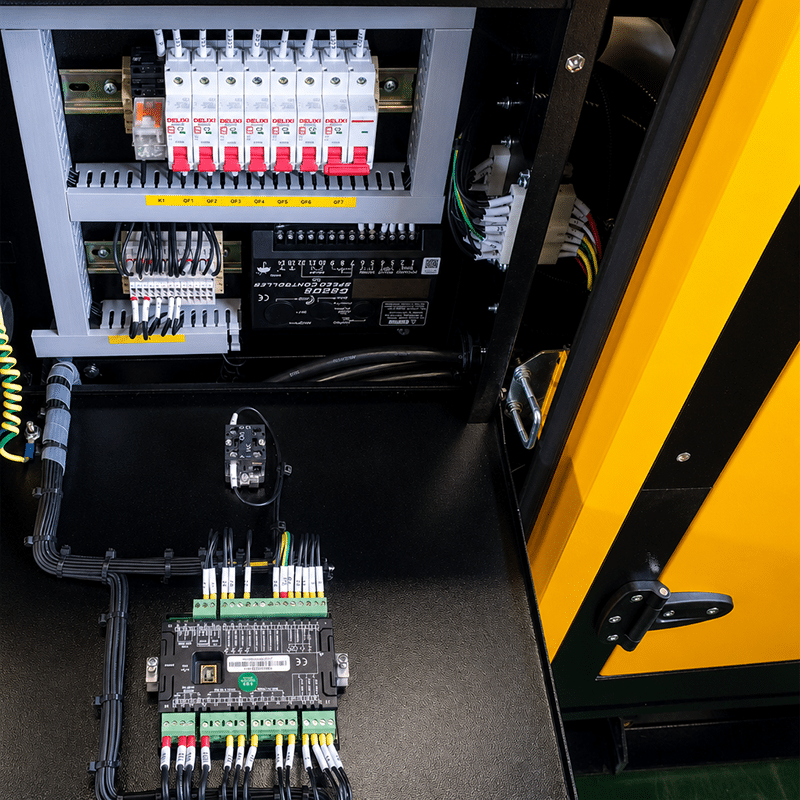
Accessibility drives the engineering philosophy behind more cost-effective power solutions deployed across the continent. Mechanics working on a practical construction generator prefer straightforward control panels and simple mechanical layouts that do not require proprietary software.
Firman integrates accessible monitoring systems and widely recognized engine configurations to empower local maintenance teams. Reducing reliance on specialized diagnostic tools minimizes catastrophic downtime during critical operational phases.
Balancing CAPEX with Long-Term Plant Availability
Final procurement decisions always hinge on the total capital expenditure available for mechanical infrastructure. Heritage power plants command steep initial acquisition costs, justified primarily by their extreme longevity and exceptional resale value.
Projects backed by massive international funding inevitably absorb these costs to guarantee absolute power certainty over decades. Heavy capital investments make sense for continuous prime-power mining operations where any outage costs millions.
Organizations operating with tighter budgets need reliable machinery that does not compromise their entire financial runway. Deploying a well-engineered industrial diesel generator bridges the gap between upfront affordability and dependable daily performance.
Balancing initial equipment costs against functional durability ensures commercial sites remain actively powered without exhausting operational funds. Smart buyers ultimately choose the machine that perfectly matches their specific environmental reality and maintenance capabilities.