

For water park operators and project planners, choosing the right attraction is not only about creating exciting experiences but also about managing visitor flow during busy periods. On peak days, popular rides can quickly become crowded if their capacity does not match guest demand. This is why throughput planning plays an important role when selecting attractions such as multi-lane combo slides.
A well-designed multi-lane combo slide can improve guest circulation by allowing multiple riders to enjoy the attraction at the same time. When combined with suitable water park planning, attractions like a rainbow water slide, a colorful water slide, and fiberglass water slides can help create a balanced experience while maintaining efficient operation.
Understanding how ride capacity works allows operators to make better decisions when selecting equipment and designing attraction layouts.
Why Throughput Matters in Water Slide Planning
Throughput refers to the number of guests an attraction can serve within a specific period. For water parks, this measurement directly affects waiting times, guest satisfaction, and overall revenue potential.
A slide with impressive design but limited capacity may create long queues during weekends, holidays, and seasonal events. On the other hand, an attraction with properly planned capacity can keep visitors moving smoothly while allowing them to enjoy more experiences throughout the park.
Multi-lane combo slides are designed to address this challenge by offering several riding paths within one attraction. Instead of processing guests through a single slide route, multiple lanes allow several riders or groups to enter the experience together.
When planning peak day operations, several factors influence throughput, including the number of lanes, rider loading time, slide duration, exit speed, and safety procedures.
Calculating Capacity for Multi-Lane Combo Slides
A basic throughput calculation starts with understanding how many riders can enter the attraction during a specific time.
For example, if a slide allows four riders to start every 30 seconds, the theoretical hourly capacity can be estimated by multiplying the number of operating cycles by the number of riders per cycle. However, real-world capacity is usually lower because operators need time for guest preparation, safety checks, and loading procedures.
This means attraction design should consider practical operation rather than only theoretical numbers.
A multi-lane attraction can increase efficiency because multiple guests experience the ride simultaneously. Compared with a single lane slide, a multi-lane combo design can reduce waiting pressure during high traffic periods.
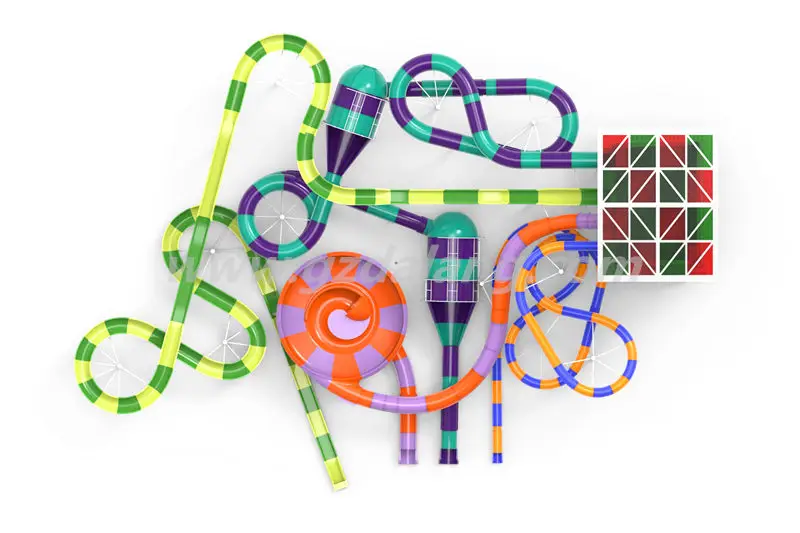
Dalang’s Overturn Rivers and Seas Combo Slide combines different slide elements into one attraction, creating varied riding experiences while supporting group participation. The design includes multiple sections and riding options, making it suitable for venues that want to offer both excitement and efficient guest movement.
Choosing the Right Slide Type for Peak Visitor Flow
Different slide categories provide different operational benefits. When planning a water park attraction mix, operators often consider how each ride contributes to overall capacity.
A rainbow water slide is popular for its bright appearance and family-friendly appeal. With multiple lanes, it can create a competitive racing experience where several visitors participate at the same time. The colorful structure also adds visual value to the park environment.
A colorful water slide can accommodate different types of visitors by supporting both single and double rafting. This flexibility allows individual riders, families, and friends to choose a ride format that suits their preferences and enjoy different experiences within the same attraction.
For more customized projects, fiberglass water slides remain a common choice because of their smooth surface, flexible design possibilities, and ability to support different slide shapes. From open body slides to enclosed sections and combination attractions, fiberglass materials allow manufacturers to create various layouts according to space and operational requirements.
How a Water Slide Supplier Supports Capacity Planning
Selecting a suitable water slide supplier involves more than comparing product appearance and pricing. Experienced suppliers can help evaluate attraction placement, expected visitor volume, and operational requirements before production begins.
A professional supplier should provide support in areas such as slide design, structural planning, safety considerations, installation guidance, and maintenance recommendations.
During the planning stage, suppliers can analyze factors such as available land area, tower height, guest demographics, and expected peak attendance. This information helps determine whether a single large attraction or a combination of several smaller attractions would provide better results.
Dalang provides fiberglass water slides and customized aquatic attraction solutions designed for different project conditions. By considering both ride experience and operational efficiency, the company helps clients develop attraction layouts that match their specific goals.
Balancing Capacity with Guest Experience
While throughput is an important measurement, it should not be the only factor when selecting attractions. A successful water park also needs to create memorable experiences.
A slide that processes many visitors but lacks excitement may not encourage repeat visits. Similarly, a highly thrilling attraction with long waiting times may reduce guest satisfaction.
The ideal approach is to combine attractions with different capacity levels. High-throughput rides such as multi-lane combo slides can manage larger visitor groups, while specialty attractions provide unique experiences for guests seeking different types of entertainment.
For example, a park may combine a rainbow water slide as a visual centerpiece with other fiberglass water slides, family attractions, and relaxation areas. This creates a more balanced visitor journey and distributes traffic throughout the venue.
Planning for Peak Days Before Installation
Peak-day performance should be considered from the early design stage. Waiting areas, queue systems, platform layout, and attraction locations all influence how efficiently guests move through the park.
Operators should estimate expected attendance, identify high-demand periods, and select attractions that can support those conditions. A properly planned multi-lane slide can become an important part of the park’s capacity strategy.
Maintenance planning is also essential. Regular inspection and proper care help maintain stable operation, especially during periods of frequent use.
Conclusion
Multi-lane combo slides provide an effective solution for managing visitor flow while delivering exciting group experiences. Through careful throughput analysis, operators can select attractions that balance capacity, guest enjoyment, and long-term operation.
A rainbow water slide, a colorful water slide, and other fiberglass water slides can add visual appeal and functional value when integrated into a complete attraction plan. Working with an experienced water slide supplier like Dalang allows project planners to consider design, capacity, and operational needs together, creating a water park environment that performs well during both regular days and peak seasons.