

Woodworking adhesives need to accommodate porous surfaces, natural variation, dust, moisture, assembly pressure, and different production speeds. Hot melt systems are useful for edge banding, profile wrapping, furniture assembly, and temporary fixation because they can be applied quickly and set as they cool. Their success still depends on both material selection and process control.
In woodworking hot melts, rosin glycerol ester can help the molten blend wet wood, veneer, paper, or decorative film. Together with the polymer-and-wax portion of the formula, it influences flow, open time, initial grip, and the firmness of the cooled bond. The useful balance depends on the substrate, equipment, and assembly sequence.
Komotac supplies several rosin ester options for woodworking and other EVA hot melt uses. Product guidance can help a manufacturer identify candidates, but the finished formula should be tested on the actual wood species, panel, coating, edge material, and equipment used in production.
An educational view of the formulation starts with the bonding sequence: the melt needs to reach the surface, spread before cooling, remain open long enough for assembly, and then develop enough strength for handling. Problems at any stage can look similar, so troubleshooting should separate material behavior from application settings.
Balancing Wetting, Open Time, and Set
rosin glycerol ester contributes to surface wetting and tack in many EVA-based formulations. Adequate wetting can help the adhesive enter small surface irregularities, but excessive penetration into porous wood may reduce the material left at the bond line. Coat weight and substrate temperature therefore matter as much as the resin choice.
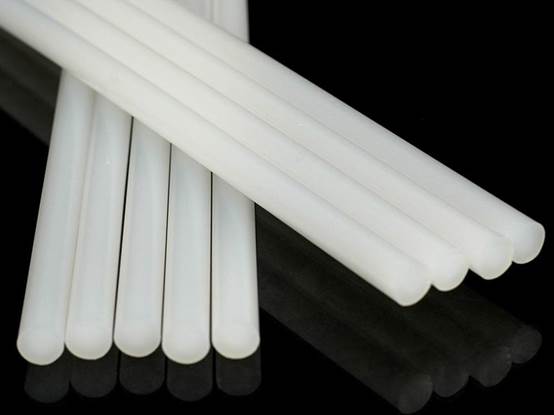
Hot melt glue for woodworking needs an open time that matches the distance between application and pressing. If the adhesive cools too soon, it may not transfer or wet properly. If it stays soft for too long, parts may move after assembly. Line speed, ambient conditions, and the thermal mass of the workpiece affect this window.
Several grades listed by Komotac may be considered during woodworking formulation trials. A controlled screen can compare them in one base recipe while monitoring melt appearance, stringing, edge coverage, green strength, and failure after conditioning. Keeping the rest of the formula unchanged makes the observations easier to interpret.
Softening point and melt viscosity are useful screening properties, but they should be explained in practical terms. One indicates how the resin responds as temperature changes, while the other relates to flow under a defined test. Neither value alone predicts the strength or heat response of a finished furniture component.
Wood moisture affects heat transfer and surface behavior. Cold or damp material may shorten effective open time, so conditioning panels helps separate substrate variation from formulation effects.
Matching the Adhesive to Wood and Equipment
rosin glycerol ester needs to be compatible with the polymer chosen for the required service level. EVA systems are common for general assembly, while other polymer families may be used for higher heat or moisture demands. The resin package should be evaluated within the selected platform rather than transferred unchanged between different adhesive chemistries.
In hot melt glue for woodworking, surface condition often determines whether a promising formula succeeds. Dust, oil, release agents, low surface temperature, uneven machining, or a difficult decorative coating can limit adhesion. Simple surface checks should be completed before the formula is changed.
Grade information for resin screening and routine supply discussions can be obtained from Komotac. The adhesive producer should also involve equipment and converting teams, because nozzle size, roller condition, tank temperature, hose temperature, press time, and maintenance influence the bond created on the line.
Representative panels should be included in trials, with joints collected from the start, middle, and end of a production run. After cooling, samples can be checked for edge lift, cohesive failure, substrate tear, heat exposure, moisture conditioning, and dimensional change. This connects laboratory formulation work with the conditions seen in manufacturing.
Joint geometry also matters. Broad faces, narrow edges, and profiles place different demands on coverage and pressure, so trial pieces should reproduce the intended bond-line shape.
Controlling Production and Long-Term Use
Once a rosin glycerol ester is approved, incoming specifications, storage rules, and lot traceability should define its routine control. Dry bags, clean charging, stock rotation, and measured heating support consistency. The plant should also state how long adhesive may remain molten before refresh or removal is required.
Hot melt glue for woodworking can change when repeatedly heated, contaminated with char, or mixed with an incompatible product. Operators may notice darker color, odor, gel particles, unstable flow, or blocked filters. Routine cleaning and clear product-change procedures often solve issues that might otherwise be blamed on the raw material.
Supplier materials outline the technical and quality resources available for the pine-derived resin portfolio. Retained samples, batch records, and agreed test methods allow the manufacturer and supplier to investigate a variation systematically. That evidence is more useful than judging an issue from an appearance difference alone in the bag.
A dependable woodworking hot melt is the result of compatible ingredients, clean surfaces, controlled temperatures, and realistic component testing. By understanding how each stage affects the bond, producers can make measured formulation changes and maintain consistent output across different wood products and production schedules.
Manufacturers assessing Komotac grades gain useful evidence from retained bonded samples and complete line records. Wood batch, coating, line speed, temperatures, and adhesive lot often explain a complaint more clearly than a raw-material test alone. A retained joint becomes a practical reference when field questions arise months after production.