

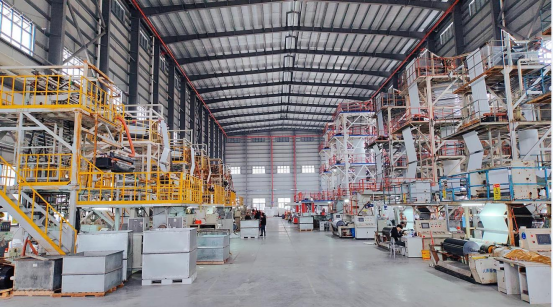
- E-commerce and global logistics operations depend heavily on reliable packaging materials. High-volume fulfillment networks cannot afford weak bag seams, failing adhesive strips, or inconsistent print branding. Selecting an industrial packaging partner is more than a simple procurement choice; it is a critical operational decision. When ordering at scale, even a minor defect rate can disrupt high-speed automated sorting machines and cause delivery delays. To secure your supply chain, it is essential to partner with an established manufacturer like WH Packing that provides the physical capacity and quality control infrastructure required for flawless global execution. Evaluating potential partners requires looking past surface-level promises and analyzing their raw material control, machinery calibration, and physical testing standards.
I.Industrial Production Capacity and Delivery Safeguards
A manufacturer’s physical footprint directly dictates its ability to handle sudden demand surges without disrupting your lead times. Procurement delays frequently stem from suppliers operating small-scale, outdated facilities that cannot handle large bulk runs. A world-class OEM manufacturer must operate dedicated facilities that minimize setup downtime and crossover contamination.
For high-volume enterprises, a production site spanning 27,000 square meters provides the physical space required for an optimized, linear workflow. This scale enables a monthly production capacity of 100 million units. Large-scale capacity ensures that massive orders are run continuously on identical, state-of-the-art machinery under stable operating conditions. This continuous processing minimizes variance in film thickness and seal integrity. It also grants the manufacturer immense raw material purchasing power. This leverage translates into stable, competitive pricing for the buyer, insulating your procurement budget from global resin market fluctuations.
II.Material Science and Environmental Customization Options
Raw material integrity is the starting point for high-performance express bags. Standard mailing bags typically utilize low-density polyethylene (LDPE) or advanced co-extruded films. Co-extrusion bonds multiple layers of plastic together, yielding far greater tear resistance than single-layer films. Professional manufacturers implement continuous gravimetric dosing systems to blend polymers with absolute precision, preventing structural drift across millions of units.
Sustainability is also a critical metric for modern supply chains. Global brand owners must comply with increasingly strict environmental regulations. A highly capable partner must offer Global Recycled Standard (GRS) certified material options. These materials generally include pre-consumer recycled plastics, post-consumer recycled plastics, and fully biodegradable polymers. Fully biodegradable bags are highly sought after in regions like Australia due to local environmental mandates. Recycled polymers possess different melt flow indexes compared to virgin resins. Therefore, your partner must have the engineering expertise to recalibrate extrusion blow heads. This calibration ensures your custom printed poly mailers retain their specified tensile strength, puncture resistance, and physical performance across every production lot.
III.Ink Precision and Visual Uniformity
Brand identity suffers when packaging colors drift between production runs. A logo that appears vibrant on the first batch must not look faded or off-color on the next. This issue commonly occurs when sourcing from low-tier suppliers who rely on manual ink-mixing methods or lack surface-treatment capabilities.
To minimize visual drift, professional factories use automated ink-dispensing systems calibrated to the Pantone Matching System (PMS). Because polyethylene is naturally non-porous, the extruded film must undergo corona treatment before printing. This electro-physical process uses high-voltage electrical discharge to temporarily increase the surface tension of the plastic. This treatment ensures the ink bonds permanently to the surface. It prevents the printed design from flaking, smudging, or transferring during rough transit conditions. High-speed flexographic printing presses with integrated inline monitoring systems are crucial to maintaining clean graphics on every single bag.
IV.Technical Quality Metrics for Printed Poly Mailers Wholesale
Visual appeal is secondary to structural performance when packages enter modern shipping networks. ISO-certified manufacturing facilities mitigate physical failure risks by integrating systematic laboratory testing directly into the production cycle. Quality assurance teams must pull samples from the line at regular intervals to verify mechanical compliance.
One primary test evaluates tear resistance along both the machine direction (MD) and the transverse direction (TD). This evaluation guarantees the mailer can withstand the high-stress friction of conveyor belts and automated sorting chutes. Additionally, the hot-melt adhesive on the closure flap must undergo rigorous peel-strength and shear-strength tests. The adhesive must form a permanent, tamper-evident seal that cannot be peeled open without visibly tearing the bag. When sourcing printed poly mailers wholesale, verifying these mechanical test protocols is vital. A professional supplier will gladly share these laboratory test reports to validate their quality claims.
V.Standardizing the Pre-Production Validation Protocol
Relying on written promises is rarely sufficient when managing high-volume global accounts. Procurement teams must request a clear technical specification sheet before signing long-term supply agreements. This document must outline precise tolerances for film thickness, bag dimensions, and seal width. A reliable OEM manufacturer usually maintains a strict variance tolerance limit of no more than 5%.
Furthermore, the manufacturer should offer complete ODM/OEM support, including free consultations and physical sampling. Once the buyer approves a physical prototype, that prototype becomes the binding quality baseline. This golden sample governs all subsequent production runs. Partnering with a manufacturer that has established relationships with global express giants like FedEx and UPS ensures your packaging meets international shipping standards.
VI.Future-Proofing Your Packaging Supply Chain
Selecting the right packaging partner involves evaluating more than just the lowest initial unit cost. Long-term cost efficiency comes from avoiding delivery delays, physical transit failures, and branding inconsistencies. A manufacturer that combines raw material expertise, ISO-compliant quality control, and massive industrial capacity protects your brand and your bottom line. Focusing on certified material options and verified mechanical testing allows global logistics and e-commerce leaders to build resilient supply chains. The ideal manufacturing partner acts as a seamless extension of your operations, ensuring that the millionth bag delivered matches the exact quality of the first.